
Demand for energy is growing across many countries in the world, as people get richer and populations increase. If this increased demand is not offset by improvements in energy efficiency elsewhere, then our global energy consumption will continue to grow year-on-year. Growing energy consumption makes the challenge of.
When we look at total energy consumption, differences across countries often reflect differences in population size: countries with lots of people inevitably consume more energy.
Earth's energy budget (or Earth's energy balance) is the balance between the that receives from the and the energy the Earth loses back into . Smaller energy sources, such as Earth's internal heat, are taken into consideration, but make a tiny contribution compared to solar energy. The energy budget also takes into account how energy moves through the . The Sun heats the equa.

This article focuses on the quantity of energy we consume — looking at total energy and electricity consumption; how countries compare when we look at this per person; and how energy consumption is changing over time.
Demand for energy is growing across many countries in the world, as people get richer and populations increase. If this increased demand is not offset by improvements.
When we look at total energy consumption, differences across countries often reflect differences in population size: countries with lots of people inevitably consume more energy.
This article focuses on the quantity of energy we consume — looking at total energy and electricity consumption; how countries compare when we look at this per person; and how energy consumption is changing over time.
Demand for energy is growing across many countries in the world, as people get richer and populations increase. If this increased demand is not offset by improvements.
When we look at total energy consumption, differences across countries often reflect differences in population size: countries with lots of people inevitably consume more energy.
Total energy supply (TES) indicates the sum of production and imports subtracting exports and storage changes. For the whole world TES nearly equals primary energy (PE) because imports and exports cancel out, but for countries TES and PE differ in quantity, and also in quality as secondary energy is involved, e.g., import of an oil refinery product. TES is all energy required to supply energy for end users. The tables list TES and PE for some countries where these differ much, both in 2021 and TES history.

Demand for energy is growing across many countries in the world, as people get richer and populations increase. If this increased demand is not offset by improvements.
When we look at total energy consumption, differences across countries often reflect differences in population size: countries with lots of people inevitably consume more energy.

For an elliptic orbit the specific orbital energy is the negative of the additional energy required to accelerate a mass of one kilogram to escape velocity (parabolic orbit). For a hyperbolic orbit, it is equal to the excess energy compared to that of a parabolic orbit.
In the , the specific orbital energy $${\displaystyle \varepsilon }$$ (or specific vis-viva energy) of two is the constant quotient of their (the sum of their mutual
ISSThe has an of 91.74 minutes (5504 s), hence by the semi-major axis of its orbit is 6,738 km.The specific orbital energy associated with this orbit is −29.6.
For an elliptic orbit the rate of change of the specific orbital energy with respect to a change in the semi-major axis is $${\displaystyle {\frac {\mu }{2a^{2}}}}$$ where• $${\displaystyle \mu ={G}(m_{1}+m_{2})}$$ is the
Assume:• a is the acceleration due to (the time-rate at which is spent)• g is.
Demand for energy is growing across many countries in the world, as people get richer and populations increase. If this increased demand is not offset by improvements.
When we look at total energy consumption, differences across countries often reflect differences in population size: countries with lots of people inevitably consume more energy.
Different methods of can incur a variety of different costs, which can be divided into three general categories: 1) wholesale costs, or all costs paid by utilities associated with acquiring and distributing electricity to consumers, 2) retail costs paid by consumers, and 3) external costs, or , imposed on society. Wholesale costs include initial , operations and maintenance (O&M), transmission, and costs of.
Demand for energy is growing across many countries in the world, as people get richer and populations increase. If this increased demand is not offset by improvements.
When we look at total energy consumption, differences across countries often reflect differences in population size: countries with lots of people inevitably consume more energy.

In 2005, Wesco acquired the Carlton-Bates Company, a provider of original equipment products and supply solutions to industrial customers. In the same year, magazine named Wesco as one of their 400 Best Big Companies, an honor which was received again in 2006, 2007, and 2009. In 2006, Wesco acquired the Communication Supply Corporation, a national distributor of data communications products for enterprise and data center customers.

The universe is all of and and their contents. It comprises all of , any , and , and therefore all forms of and , and the structures they form, from to entire . Since the early 20th century, the field of establishes that emerged together at the 13.787±0.020 billion years ago and.
is defined via , so the unit of energy is the same as the unit of work – the (J), named in honour of and his experiments on the . In slightly more fundamental terms, 1 joule is equal to 1 and, in terms of An energy unit that is used in , , and is the (eV). One eV is equivalent to .
Our Projects in the wowld

Integrated Photovoltaic-Storage Project

Domestic Energy Storage Project

Energy Storage System,Control System,Electrical Protection

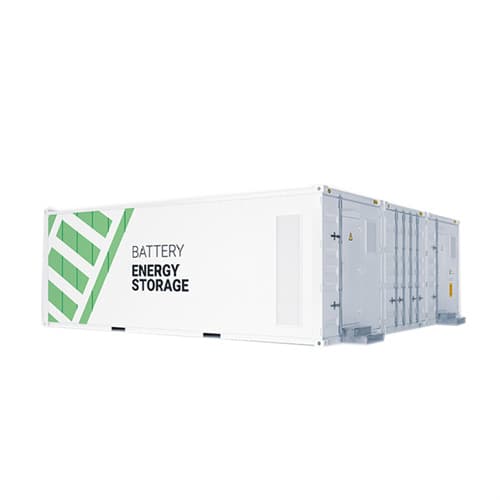
10-foot and 20-foot container,energy storage systems

1MW Photovoltaic Folding Container Project

Distributed Photovoltaic + Energy Storage Project
Your message has been received. Our team will contact you within 24 hours.
Fill out the form below to get a free quotation.
