
The higher the modulus, the more stress is needed to create the same amount of strain; an idealized rigid body would have an infinite Young's modulus. Conversely, a very soft material (such as a fluid) would deform without force, and would have zero Young's modulus.
Young's modulus (or the Young modulus) is a mechanical property of solid materials that measures the tensile or compressive when the force is applied lengthwise. It is the for or axial . Young's modulus is.
Young's modulus, $${\displaystyle E}$$, quantifies the relationship between tensile or compressive $${\displaystyle \sigma }$$ (force per unit area) and axial
Young's modulus is calculated by dividing the , $${\displaystyle \sigma (\varepsilon )}$$, by the , $${\displaystyle \varepsilon }$$, in the elastic (initial, linear) portion of the physical :
Young's modulus enables the calculation of the change in the dimension of a bar made of an elastic material under tensile or compressive loads. For instance, it predicts how much a material sample extends under tension or shortens under compression. The Young's modulus.
• E 111, • The.
The Solar Dynamics Observatory (SDO) is a mission which has been observing the since 2010. Launched on 11 February 2010, the observatory is part of the (LWS) program. The goal of the LWS program is to develop the scientific understanding necessary to effectively address those aspects of the connected – system directly affectin.

The goal of the SDO is to understand the influence of the Sun on the Earth and near-Earth space by studying the solar atmosphere on small scales of space and time and in many wavelengths simultaneously.
The Solar Dynamics Observatory (SDO) is a mission which has been observing the since 2010. Launched on 11 February 2010, the observatory is part of the (LWS) program.The goal of the LWS.
Helioseismic and Magnetic Imager (HMI)The and Magnetic Imager (HMI), led from in , studies solar variability and characterizes the Sun's interior and the various components of magnetic activity. HMI takes high-resolution.
's at managed the payload integration and launch. The SDO launched from
• SDO: Year 5• Camilla Corona SDO• SDO 3-D schematic• SDO Instruments• SDO.
The SDO spacecraft was developed at NASA's in , and launched on 11 February 2010, from Cape Canaveral Air Force Station (
SDO down-links science data () from its two onboard , and () from its two onboard . The ground station consists of two dedicated (redundant) 18-meter radio antennas in
Camilla Corona is a and is the mission for SDO. It is part of the team and assists with various.
Our Projects in the wowld

Integrated Photovoltaic-Storage Project

Domestic Energy Storage Project

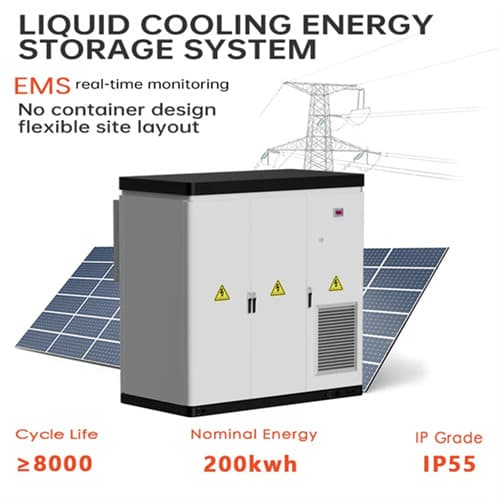
Energy Storage System,Control System,Electrical Protection

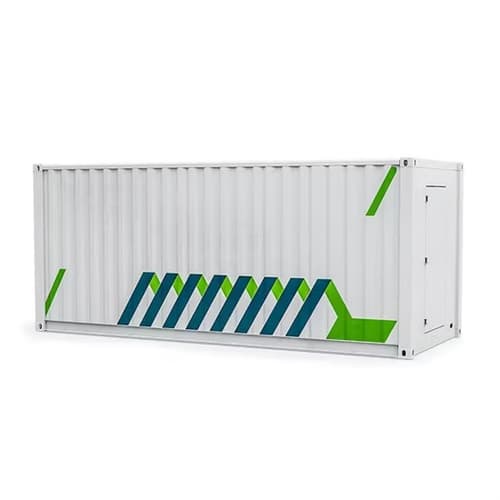
10-foot and 20-foot container,energy storage systems

1MW Photovoltaic Folding Container Project

Distributed Photovoltaic + Energy Storage Project
Your message has been received. Our team will contact you within 24 hours.
Fill out the form below to get a free quotation.
