

“Storage” refers to technologies that can capture electricity, store it as another form of energy (chemical, thermal, mechanical), and then release it for use when it is needed. Lithium-ion batteriesare one such technology. Although using energy storage is never 100% efficient—some.
Pumped-storage hydropoweris an energy storage technology based on water. Electrical energy is used to pump water uphill into a reservoir when energy demand is low. Later, the water can be.
Many of us are familiar with electrochemical batteries, like those found in laptops and mobile phones. When electricity is fed into a battery, it causes a chemical reaction, and energy is stored. When a battery is discharged, that chemical reaction is reversed, which creates.
The most common type of energy storage in the power grid is pumped hydropower. But the storage technologies most frequently coupled with solar power plants are electrochemical storage (batteries) with PV plants and thermal storage (fluids) with CSP plants. Other types of.

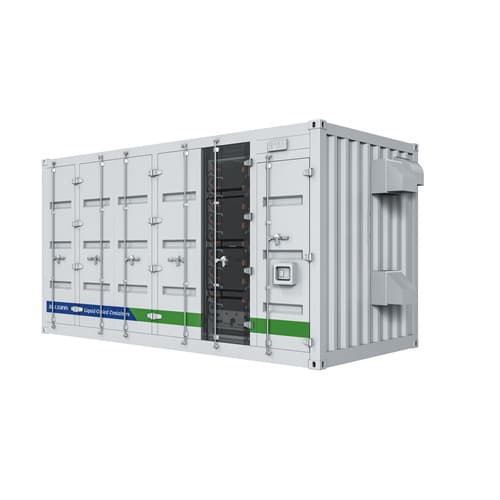
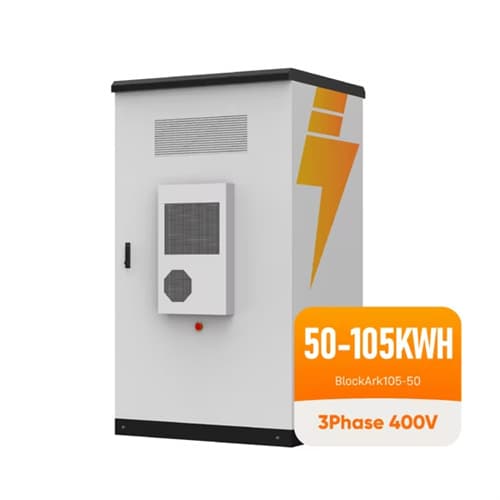
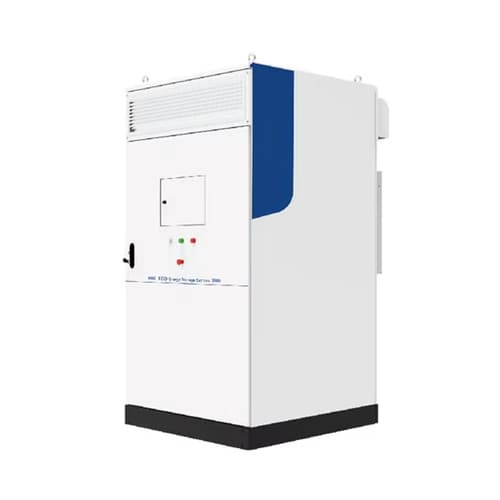
A battery energy storage system (BESS), battery storage power station, battery energy grid storage (BEGS) or battery grid storage is a type of technology that uses a group of in the grid to store . Battery storage is the fastest responding on , and it is used to stabilise those grids, as battery storage can transition from standby to full power in u.

Flywheel energy storage (FES) works by spinning a rotor (flywheel) and maintaining the energy in the system as rotational energy. When energy is extracted from the system, the flywheel's rotational speed is reduced as a consequence of the principle of conservation of energy; adding energy to the system correspondingly results in an.
A typical system consists of a flywheel supported by connected to a . The flywheel and sometimes.
GeneralCompared with other ways to store electricity, FES systems have long lifetimes (lasting decades with little or no.
Flywheels are not as adversely affected by temperature changes, can operate at a much wider temperature range, and are not subject to many of the common failures of chemical . They are also less potentially damaging to the environment, being largely made of
• • •
TransportationAutomotiveIn the 1950s, flywheel-powered buses, known as
• • • – Form of power supply• – High-capacity electrochemical capacitor
• Beacon Power Applies for DOE Grants to Fund up to 50% of Two 20 MW Energy Storage Plants, Sep. 1, 2009• Sheahen,.
Due to its high solar potential, solar power developments will likely grow most in the north. Solar generation is expected to contribute 46% of Chile's electricity in 2060.
Solar power in Chile is an increasingly important source of energy. Total installed photovoltaic (PV) capacity in Chile reached 11.05 GW in 2023. In 2024, Solar energy provided 19.92 TWh of electricity generation in Chile, accounting for.
In 2013 the Atacama 1 solar complex was proposed as a 110 MW electric plant (the first in Latin America) and a 100 MW photovoltaic plant. The solar thermal plant will include 17.5.
In June 2014, the 100- (MW) Amanecer Solar CAP, a located near in the was inaugurated. It was developed by the company with the.
• ; (2023). Atacama: renewable energy and mining in the high desert of Chile (First ed.). Göttingen, Germany:

Beginning with the surge in use, which accompanied the , energy consumption steadily transitioned from wood and biomass to . The early development of solar technologies starting in the 1860s was driven by an expectation that coal would soon become scarce. However, development of solar technologies stagnated in the early 20th century in the face of the increasing availabi.
The following is a list of products powered by sunlight, either directly or through electricity generated by solar panels. Solar air conditioningSolar balloonSolar charger Solar chimneySolar-powered waste compacting binSolar cookerSolar dryerSolar-powered fanSolar furnaceSolar inverterSolar keyboardSolar lampSolar.
• • • •
• Beattie, Donald A. (1997). . Cambridge, Massachusetts: . .• Butti, Ken &.
The Earth receives 174 (PW) of incoming solar radiation () at the upper . Approximately 30% is reflected back to space while the rest, 122 PW, is absorbed by clouds, oceans and land masses. The of solar light at the Earth's surface is mostly spread across the and ranges with a small part in the . Most of the world's population live in areas with insolation.

As of 2025 about 31% of installed capacity is residential. By 2027 solar will be required on almost all new homes in England. According to a report on behalf of the European Commission, in 2015 the United Kingdom had 2,499 MW of residential solar PV capacity, with 775,000 residential solar PV producers, representing 2.7% of households. The average size of residential solar PV systems was estimated to be 3.25 kW, and the t.

A battery energy storage system (BESS), battery storage power station, battery energy grid storage (BEGS) or battery grid storage is a type of technology that uses a group of in the grid to store . Battery storage is the fastest responding on , and it is used to stabilise those grids, as battery storage can transition from standby to full power in u.

Renewable energy (also called green energy) is made from that are replenished on a . The most widely used renewable energy types are , , and . and are also significant in some countries. Renewable energy installations can be large or small and are suited for both urban and rural areas. Renewable energy is oft.
Our Projects in the wowld

Integrated Photovoltaic-Storage Project

Domestic Energy Storage Project

Energy Storage System,Control System,Electrical Protection

10-foot and 20-foot container,energy storage systems

1MW Photovoltaic Folding Container Project

Distributed Photovoltaic + Energy Storage Project
Your message has been received. Our team will contact you within 24 hours.
Fill out the form below to get a free quotation.
