

The price of solar panels has declined substantially over the last decade as the industry has matured and reached production at the largest global scale. Since 2010, the cost to install solar panels on a home has fallen by roughly 50%. Costs rose slightly from 2020-2023 largely due to supply chain tangles from the pandemic, and then.
Today’s premium monocrystalline solar panels typically cost between $1 and $1.50 per Watt, putting the price of a single 400-watt solar panel between.
There are two main ways to calculate the cost of putting solar panels on your home: 1. Price per watt($/W) is useful for comparing multiple solar offers 2. Cost per.
The third – and least accurate – way to get an idea of how much solar panels will cost for your home is to see how much solar panels cost for homes similar to yours. Now, we absolutely encourage.
There are a few ways to get a rough estimate of how much solar panels will cost without sitting through a sales pitch. These include: 1. Online calculators 2. Hand calculations based on your electricity usage 3. The average cost of solar panels for comparable homes Let’s start with the quickest.
[FAQS about Buy solar grid cost]

Grid-tie inverters convert DC electrical power into AC power suitable for injecting into the electric utility company grid. The grid tie inverter (GTI) must match the phase of the grid and maintain the output voltage slightly higher than the grid voltage at any instant. A high-quality modern grid-tie inverter has a fixed unity , which means its output voltage and current are perfectly lined up, and its phase angle is within 1° of the AC power grid. The inverter has an internal computer that senses the current.

Successful stand-alone systems generally take advantage of a combination of techniques and technologies to generate reliable power, reduce costs, and minimize.
For many people, powering their homes or small businesses using a small renewable energy system that is not connected to the electricity grid -- called a stand-alone.
In addition to purchasing photovoltaic panels, a wind turbine, or a small hydropower system, you will need to invest in some additional equipment (called \"balance-of-system\").
A stand-alone power system (SAPS or SPS), also known as remote area power supply (RAPS), is an system for locations that are not fitted with an system. Typical SAPS include one or more methods of , , and regulation. Electricity is typically generated by one or more of the following methods:
Om onafhankelijk te worden van het elektriciteitsnetwerk, bestaan er verschillende off grid systemen. Je kan zowel je eigen elektriciteit opwekken als opslaan. Schaf je een off grid systeem aan voor je woning, dan is het ook interessant om je energieverbruik te verminderen met bv. isolatie. Hoe minder energie je nodig hebt, hoe.
Ook om je sanitair water of huis te verwarmen bestaan verschillende off grid systemen. De brandstof voor de verwarming kan herbruikbaar of fossiel zijn. 1. Dit pompsysteem wordt.
Voor bepaalde off grid systemen kan je subsidies krijgen. De voorwaarden en bedragen vind je op de website van jouw overheid en hangen af van het type off grid systeem.
A grid-tied electrical system, also called tied to grid or grid tie system, is a semi-autonomous electrical generation or grid energy storage system which links to the mains to feed excess capacity back to the local mains electrical grid. When insufficient electricity is available, electricity drawn from the mains grid can make.
Direct Current (DC) electricity from sources such as hydro, wind or solar is passed to an which is . The inverter monitors the alternating.
Local generation can be from an source such as , or a . Individuals can choose.
• Armenia• Australia• Bangladesh• Bosnia and Herzegovina• Brazil
• Motavalli, Jim (September 2, 2007). . New York Times. Retrieved 2007-09-02.•
A key concept of this system is the possibility of creating an electrical micro-system that is not dependent on the grid-tie to provide a high level quality of.
A micro generation facility can be started with a very small system such as a home wind power generation, photovoltaic (solar cells) generation, or micro combined heat and power (Micro-CHP) system.
• • • • •

Ähnlich einem automatischen Rückschlagventil sorgt der Off-Grid Wechselrichter MIT Netzanschluss dafür, dass in deinem Haus niemals das Licht ausgeht. Die Inselanlage MIT automatischer Netzumschaltung spart richtig viel Energie durch optimalen Eigenverbrauch.
Was macht die Inselanlage MIT Netzanschluss so besonders, und wie funktioniert sie? Nehmen wir diesen PV-Anlagentyp etwas genauer unter die Lupe: Zunächst scheint der.
Ein großflächiger Blackout ist gar nicht so unwahrscheinlich. Es gibt eine Reihe seriöser Fachleute, die ein solches Szenario auch in Deutschland für.
Was heißt das nun konkret für die Planung deiner PV-Anlage? 1. Eine klassische On-Grid “Nur Einspeise Anlage” ohne Speicher hat sich vor dem Hintergrund der hohen Energiekosten sowie.
OK – wo Sonnenlicht ist, da ist auch Schatten. Wo liegen also die Nachteile einer solchen Lösung? 1. Nachteil 1: Man kann keinen Strom ins öffentliche Netz einspeisen. Es gibt deshalb keine Einspeisevergütung nach dem “Erneuerbare Energien Gesetz” (EEG). 2. Nachteil 2:.

Grid energy storage, also known as large-scale energy storage, is a set of technologies connected to the electrical power grid that store energy for later use. These systems help balance supply and demand by storing excess electricity from variable renewables such as solar and inflexible sources like nuclear power, releasing it when.
Any must match electricity production to consumption, both of which vary significantly over time. Energy derived from and varies with the weather on time scales ranging from less than a second to weeks or.
Electricity can be stored directly for a short time in capacitors, somewhat longer electrochemically in , and much longer chemically (e.g. hydrogen), mechanically (e.g. pumped hydropower) or as heat. The first pumped hydroelectricity was constructed at the end.
CostsThe (LCOS) is a measure of the lifetime costs of storing electricity per
• • • (ESaaS)• •

Total installed grid-scale battery storage capacity stood at close to 28 GW at the end of 2022, most of which was added over the course of the previous 6 years.
Technology costs for battery storage continue to drop quickly, largely owing to the rapid scale-up of battery manufacturing for electric vehicles, stimulating deployment in the.
Major markets target greater deployment of storage additions through new funding and strengthened recommendations Countries and regions making notable.
Pumped-storage hydropower is still the most widely deployed storage technology, but grid-scale batteries are catching up The total installed capacity of pumped-storage.
The rapid scaling up of energy storage systems will be critical to address the hour‐to‐hour variability of wind and solar PV electricity generation on the grid, especially as.

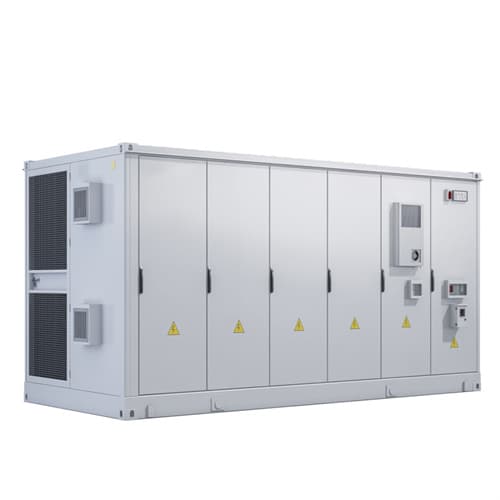
A battery energy storage system (BESS), battery storage power station, battery energy grid storage (BEGS) or battery grid storage is a type of energy storage technology that uses a group of batteries in the grid to store electrical energy. Battery storage is the fastest responding dispatchable source of power on electric grids, and it is.
Battery storage power plants and (UPS) are comparable in technology and function. However, battery.
Most of the BESS systems are composed of securely sealed , which are electronically monitored and replaced once their performance falls.
While the energy storage capacity of grid batteries is still small compared to the other major form of grid storage, with.
Since they do not have any mechanical parts, battery storage power plants offer extremely short control times and start times, as little as 10 ms. They can therefore help dampen the fast oscillations that.

Grid energy storage, also known as large-scale energy storage, is a set of technologies connected to the electrical power grid that store energy for later use. These systems help balance supply and demand by storing excess electricity from variable renewables such as solar and inflexible sources like nuclear power, releasing it when.
Any must match electricity production to consumption, both of which vary significantly over time. Energy derived from and varies with the weather on time scales ranging from less than a second to weeks or.
Electricity can be stored directly for a short time in capacitors, somewhat longer electrochemically in , and much longer chemically (e.g. hydrogen), mechanically (e.g. pumped hydropower) or as heat. The first pumped hydroelectricity was constructed at the end.
CostsThe (LCOS) is a measure of the lifetime costs of storing electricity per
• • • (ESaaS)• •
Our Projects in the wowld

Integrated Photovoltaic-Storage Project

Domestic Energy Storage Project

Energy Storage System,Control System,Electrical Protection

10-foot and 20-foot container,energy storage systems

1MW Photovoltaic Folding Container Project

Distributed Photovoltaic + Energy Storage Project
Your message has been received. Our team will contact you within 24 hours.
Fill out the form below to get a free quotation.
