

El precio medio de una instalación de placas solares en 2025 ronda los 4.500€, incluyendo equipos y mano de obra. Es importante recordar que el coste por vatio no es el mismo para todos los casos. Este coste varía dependiendo de la ubicación, al tamaño de la instalación, si se instala en el tejado o en el suelo, al tipo de tejado, si.
Empecemos por el principio. El coste de una instalación de placas solares puede variar mucho en función de las características de tu cubierta, la orientación del tejado, si se necesita o no grúa,.
Por ejemplo, esperamos que nuestra instalación de 3 kW típica, produzca alrededor de 200 kWh en una zona soleada y en un tejado orientado al sur sin obstáculos, pero, en cambio, sólo producirá 150 kWhen una región con menos sol o donde una Sombra afecte a la.
Veamos un ejemplo de presupuesto para placas solares en Asturias con una potencia contratada de 5,75 kW, orientación sur, sin sombras, y una factura media de 100 €/mes. 1. N.º de placas: 10.
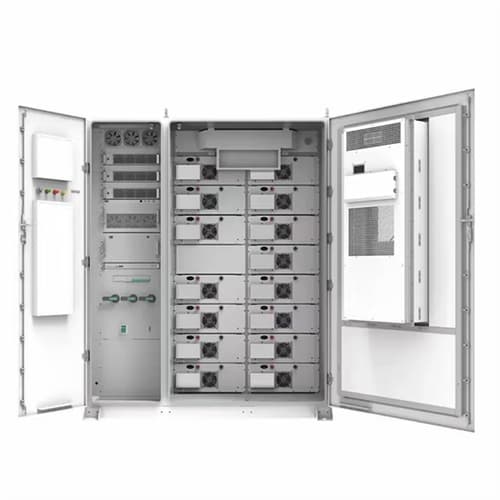
A standard 300W solar panel typically measures around 65 inches (165 cm / 5.4 feet) in length and 39 inches (99 cm / 3.7 feet) in width, with a depth of 1.4 inches (3.5 cm / 0.55 feet).
The average weight of a 300W solar panel ranges from 40 to 50 pounds (18 to 22 kg). The thickness of the panel usually varies between 1.4 and 1.8 inches (3.5 and 4.5.
Recent studies and research have focused on improving solar panel efficiency and reducing panel size. Innovations in solar cell technology, such as PERC (Passivated Emitter.
Selecting the right 300W solar panel based on size, efficiency, and available installation space is crucial. To make the best choice, follow these guidelines: 1. Compare.

MIT einem Solarmodul 400 Watt monokristallin können Sie Ihren Stromverbrauch effizienter gestalten und gleichzeitig Geld sparen. Dieses Solarpaneel ist sehr leistungsstark und liefert bis zu 400 Watt Leistung bei optimalen Bedingungen. Es hat eine hohe Effizienz.
Solarmodule sind eine effiziente Möglichkeit, um Energie aus der Sonne zu gewinnen. Das Modul MIT 400 Watt Leistung ist sowohl für die Montage auf dem.
Solarmodule MIT einer Leistung von 400 Watt sind in der Regel zu groß für den Einsatz in Einfamilienhäusern. Diese Module werden üblicherweise auf.
[FAQS about 400 watt solar panel]

Eine Photovoltaikanlage MIT 8 kWp Leistung und Stromspeicher kostet durchschnittlich 20.763 Euro (netto) inklusive Montage. Pro Kilowatt-Peak (kWp) liegen die spezifischen Kosten bei 2.595 Euro. Die gewöhnliche Preisspanne beträgt aktuell 16.610 bis 24.915 Euro. Im Kaufpreis eines 8-kWp-Komplettpakets sind alle PV.
In der nachfolgenden Tabelle sind die aktuellen Durchschnittskosten für Photovoltaikanlagen MIT 8 kWp Nennleistung (mit und ohne Speicher) aufgelistet: Alle Kostenangabe.
Dem Kauf einer PV-Anlage stehen Opportunitätskosten entgegen, deshalb sollte die erzielte Rendite der PV-Anlage MIT 8 kWp mindestens über dem risikofreien Zinssatz.
8 kWp Photovoltaikanlagen sind eine gängige und effiziente Wahl für Einfamilienhäuser. Die meisten Dachflächen haben reichlich Platz, um genügend Solarmodule.
Eine durchschnittliche PV-Anlage erzeugt im Jahr etwa 1000 kWh pro kWp (spezifischer Ertrag). Bei einer 8 kW PV-Anlage kann man also von ca. 8.000 kWh Jahresertrag.
[FAQS about 8 kilowatt solar panel price]

This is a step by step guide to charging lithium batteries with solar panels. This is a simplified, general approach. Your solar panel kit might have a different procedure so check the instructions.
You can use an MPPT or PWM solar controller. but as we explained earlier, an MPPT controller is the better choice. MPPT solar controllers cost more, but you will get more current from your array. When it comes so solar power it is all about getting maximum usage from the panels,.
How many solar panels do I need to charge lithium batteries? It depends on how many batteries you are going to charge. The more batteries, the more solar.
Lead acid batteries have a 50% depth discharge rate. So if you have a 100ah lead acid battery, only 50ah should be used. Once the capacity reaches 50ah, it is time to charge. This can be.
In other words, solar panels can charge lithium batteries just fine. Provided of course there is enough sunlight and a quality MPPT charge controller is part of the system. Once set up, you can leave.
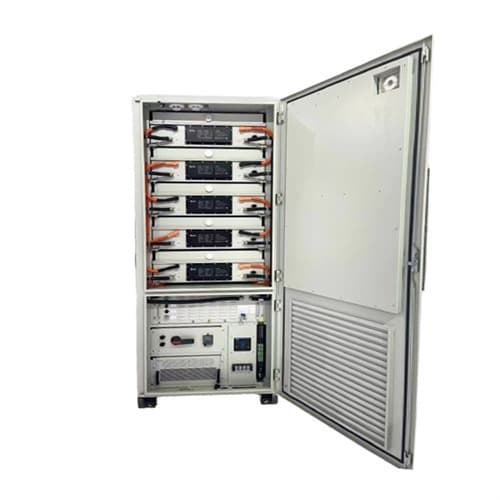
Absolutely! In fact, most home solar systems are currently operating without battery storage. If you’re fine with drawing from the grid and not particularly worried about power outages, you might not need a battery. However, there are benefits to having battery storage for your solar panels. In addition to backup power, battery.
If battery storage isn’t in the cards for now, don’t worry! You can still use your solar panels to power your home without battery storage. In fact, a majority of home solar systems aren’t connected to battery storage..
It many cases, battery storage is a “nice to have” with solar panels for home use. However, there are a growing number of scenarios where having a solar battery bank is beneficial, if not completely necessary.
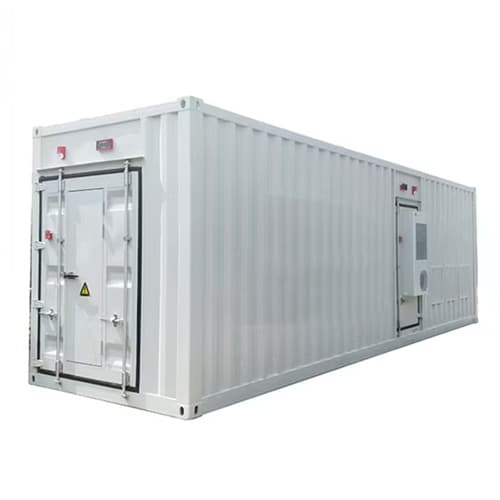
The price of solar panels has declined substantially over the last decade as the industry has matured and reached production at the largest global scale. Since 2010, the cost to install solar panels on a home has fallen by roughly 50%. Costs rose slightly from 2020-2023 largely due to supply chain tangles from the pandemic, and then.
Today’s premium monocrystalline solar panels typically cost between $1 and $1.50 per Watt, putting the price of a single 400-watt solar panel between.
There are two main ways to calculate the cost of putting solar panels on your home: 1. Price per watt($/W) is useful for comparing multiple solar offers 2. Cost per.
The third – and least accurate – way to get an idea of how much solar panels will cost for your home is to see how much solar panels cost for homes similar to yours. Now, we absolutely encourage.
There are a few ways to get a rough estimate of how much solar panels will cost without sitting through a sales pitch. These include: 1. Online calculators 2. Hand calculations based on your electricity usage 3. The average cost of solar panels for comparable homes Let’s start with the quickest.

The top five solar module producers in 2011 were: Suntech, First Solar, Yingli, Trina, and Canadian. The top five solar module companies possessed 51.3% market share of solar modules, according to PVinsights' market intelligence report.
This is a list of notable photovoltaics (PV) companies.Grid-connected solar (PV) is the fastest growing energy technology in the world, growing from a cumulative installed capacity of 7.7 GW in.
China now manufactures more than half of the world's solar photovoltaics. Its production has been rapidly escalating. In 2001 it had less than 1% of the world market. In contrast, in 2001 Japan and the.
Other notable companies include:• , Hong Kong, China• , Tucson, Arizona, US•
Top 10 by yearSummaryAccording to EnergyTrend, the 2011 global top ten , solar cell and solar module manufacturers by capacity were found in countries including People's Republic of China, United States,.
• • • • •
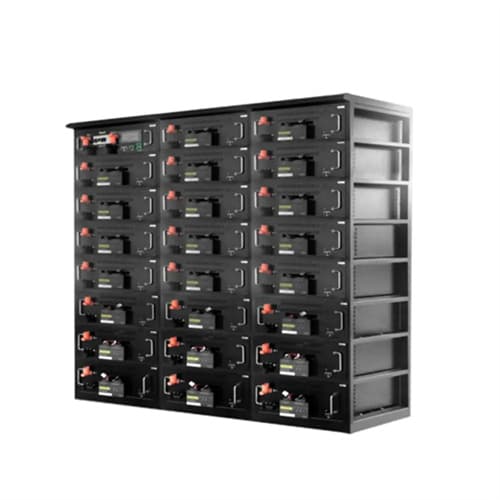
A solar tracker is a device that follows the sun as it moves across the sky. When solar trackers are coupled with solar panels, the panels can follow the path of the sun and produce more renewable energy for you to use. Solar trackers are usually paired with ground-mount solar systems, but recently, rooftop-mounted.
Solar trackers can greatly increase the cost of a photovoltaic solar installation. A standard 4-kilowatt ground-mounted solar system will cost about $13,000. Tracking equipment can cost anywhere from $500 per panel to over $1,000 per panel. If you included a single-axis tracking system on the.
In almost all scenarios, especially for residential solar systems, solar trackers are not worth the additional investment. This is why solar trackers aren’t widely used in the residential solar.
In most cases, solar trackers are not worth the additional investment, even though they do produce more electricity. Because solar panels are cheaper than.

A solar micro-inverter, or simply microinverter, is a plug-and-play device used in that converts (DC) generated by a single to (AC). Microinverters contrast with conventional string and central solar inverters, in which a single inverter is connected to multiple solar panels. The output from several microinverters can be combined and often fed to the .
Our Projects in the wowld

Integrated Photovoltaic-Storage Project

Domestic Energy Storage Project

Energy Storage System,Control System,Electrical Protection

10-foot and 20-foot container,energy storage systems

1MW Photovoltaic Folding Container Project

Distributed Photovoltaic + Energy Storage Project
Your message has been received. Our team will contact you within 24 hours.
Fill out the form below to get a free quotation.
