

Electric generators were known in simple forms from the discovery of in the 1830s. In general, some form of prime mover such as an engine or the turbines described above, drives a rotating magnetic field past stationary coils of wire thereby turning mechanical energy into electricity. The only commercial scale forms of electricity production that do not employ a generator are and

Solar power, also known as solar electricity, is the conversion of energy from into , either directly using (PV) or indirectly using . use the to convert light into an . Concentrated solar power systems use or mirrors and systems to focus a large area of sunlight to a hot spot, often to drive a .

Islanding is the intentional or unintentional division of an into individual disconnected regions with their own . Intentional islanding is often performed as a to mitigate a . If one island collapses, it will not take neighboring islands with it. For example, have cooling systems that are typically powered from the general grid. The coolant loops typically lie.
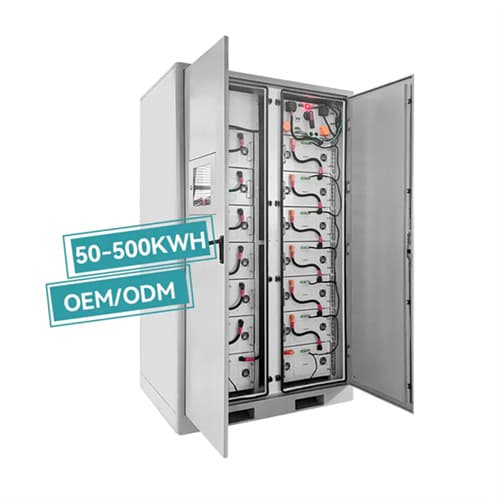
Electricity can be stored directly for a short time in capacitors, somewhat longer electrochemically in , and much longer chemically (e.g. hydrogen), mechanically (e.g. pumped hydropower) or as heat. The first pumped hydroelectricity was constructed at the end of the 19th century around in Italy, Austria, and Switzerland. The technique rapidly expanded during the 1960s to 1980s ,.

Solar power, also known as solar electricity, is the conversion of energy from into , either directly using (PV) or indirectly using . use the to convert light into an . Concentrated solar power systems use or mirrors and systems to focus a large area of sunlight to a hot spot, often to drive a .

The article provides an overview of electric power transmission and distribution systems, explaining the concept of an infinite grid, high-voltage transmission, and various distribution methods including SWER and ring-fed systems.
Rural areas are generally a special case where load units are comparatively small and their points of application are widely dispersed. One method of providing electrical power in rural areas is the Single-Wire Earth-Return (SWER) system. Figure 2shows an isolating transformer.
When the two conditions for balance are not met, a system is said to be ‘unbalanced’ and a current may flow in the neutral. By convention, the generated voltage is assumed to be positive when.
For general purposes, three-phase power may be supplied using either a 3-wire or a 4-wire system. A 3-wire system is one that uses only the three line conductors, as shown in Figure 4 (a). The.
The loading on a three-phase system is said to be ‘balanced’ when the three lines have the same current and power factor. Under these conditions, the line.

Learn about grid-connected solar PV systems, which work with the utility grid to supply or offset power. Find out how to choose inverters, batteries, and backup loads for residential and commercial applications.
Grid-tied PV systems can be set up with or without a battery backup. The simplest grid-tied PV system does not use battery backup but offers a way to.
The Underwriters Laboratories® (UL) is an independent product safety certification organization that writes standards for safety and tests products for compliance. Other UL standards are written for.
The size of the inverter and battery backup required for a partially backed-up system requires an analysis of the loads that will be put on the backed-up.
Grid-tied PV systems with a battery backup can continue to supply power any time the grid goes down. The system can switch seamlessly to backup power when an electrical outage occurs..

This example shows how to model a three-phase grid-connected solar photovoltaic (PV) system.
The solar plant subsystem models a solar plant that contains parallel-connected strings of solar panels. The solar panel is modeled using the Solar Cell.
This example implements two MPPT techniques. By using the variant variable 'MPPT', you can choose incremental conductance MPPT or.
Before linearizing the system, to disconnect the MPPT outer loop and break the current inner current loop, set the workspace variable 'closeLoop' to zero and use the average inverter model. To use.
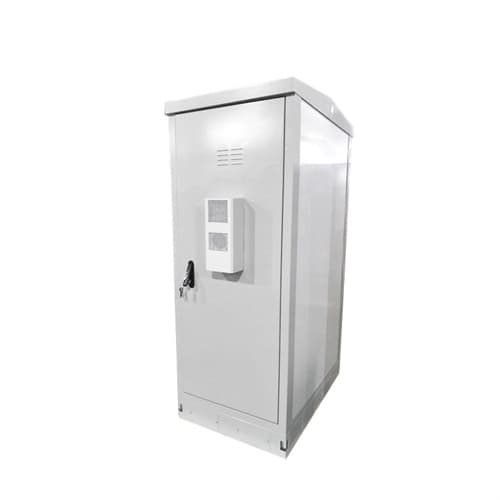
The article discusses grid-connected solar PV system, focusing on residential, small-scale, and commercial applications. It covers system configurations, components, standards such as UL 1741, battery backup options, inverter sizing, and microinverter systems.
Grid-tied PV systems can be set up with or without a battery backup. The simplest grid-tied PV system does not use battery backup but offers a way to.
The Underwriters Laboratories® (UL) is an independent product safety certification organization that writes standards for safety and tests products for compliance. Other UL standards are written for.
The size of the inverter and battery backup required for a partially backed-up system requires an analysis of the loads that will be put on the backed-up.
Grid-tied PV systems with a battery backup can continue to supply power any time the grid goes down. The system can switch seamlessly to backup power when an electrical outage occurs..

modules consist of a large number of solar cells and use light energy from the Sun to generate electricity through the . Most modules use -based cells or . The structural () member of a module can be either the top layer or the back layer. Cells must be protected from mechanical damage and moisture. The cells and modules are usually connected ele.
Our Projects in the wowld

Integrated Photovoltaic-Storage Project

Domestic Energy Storage Project

Energy Storage System,Control System,Electrical Protection

10-foot and 20-foot container,energy storage systems

1MW Photovoltaic Folding Container Project

Distributed Photovoltaic + Energy Storage Project
Your message has been received. Our team will contact you within 24 hours.
Fill out the form below to get a free quotation.
