

A charge controller, charge regulator or battery regulator limits the rate at which electric current is added to or drawn from electric batteries to protect against electrical overload, overcharging, and may protect against overvoltage. This prevents conditions that reduce battery performance or lifespan and may pose a safety risk. It.
Charge controllers are sold to consumers as separate devices, often in conjunction with or , for uses such as , , and home battery storage systems. In solar applications, charge controllers may also.
Circuitry that functions as a charge regulator controller may consist of several electrical components, or may be encapsulated in a single microchip, an (IC) usually called a charge controller IC or charge control IC.
Due to limitations in currents that copper wires could safely handle, charging have been developed to allow the end device to request elevated voltages for increasing the power throughput without increasing heat in the wires. The arriving voltage is then converted down to the.
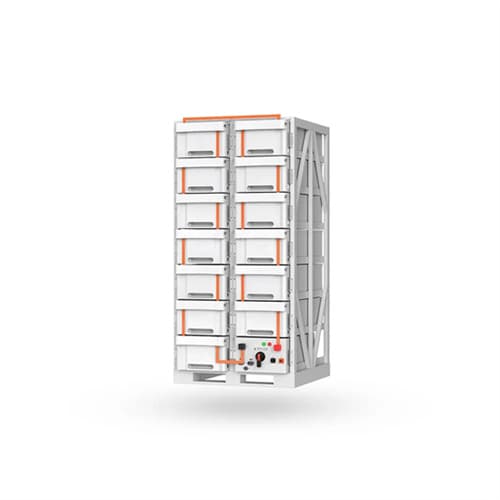
Charge controllers are sold to consumers as separate devices, often in conjunction with or , for uses such as , , and home battery storage systems. In solar applications, charge controllers may also be called solar regulators or solar charge controllers. Some charge controllers / solar regulators have additional features, such as a low voltage disconnect (LVD), a separate circuit which powers down the load when the batteries become overly discharged (some batt.

Charging your batteries with a solar panel is a great way to use clean, renewable energy. However, before you can get started, you'll need to install a charge controller, which regulates the voltage from the solar panel as it's transferred to the battery. Otherwise, on sunny days, the solar.
China Datang Corporation (CDT) is one of the five large-scale in , established on the basis of former in 2002. It is a solely directly managed by the and is the experimental state-authorized investment and state enterprise ratified by the .

is the largest market in the world for both (PV) and . Its PV capacity crossed 1,000 gigawatt (one , 1 TW) in May 2025. By June 2025, China's PV capacity surpassed 1,100 gigawatt. In 2024, China added 277 gigawatts (GW) of solar power, which was equivalent to 15% of the world's total cumulative installed solar capacity.

is the largest market in the world for both (PV) and . Its PV capacity crossed 1,000 gigawatt (one , 1 TW) in May 2025. By June 2025, China's PV capacity surpassed 1,100 gigawatt. In 2024, China added 277 gigawatts (GW) of solar power, which was equivalent to 15% of the world's total cumulative installed solar capacity.

Invenergy is an American-based power generation development and operations company. The company develops, builds, owns and operates power generation and projects in , and , including wind, solar, and natural gas power generation and energy storage facilities. It is North America's largest privately held renewable power generation company. According to Invenergy, the company has developed over 220 projects totaling 36 gigawatts of capacit.
[FAQS about Invenergy china how much ]
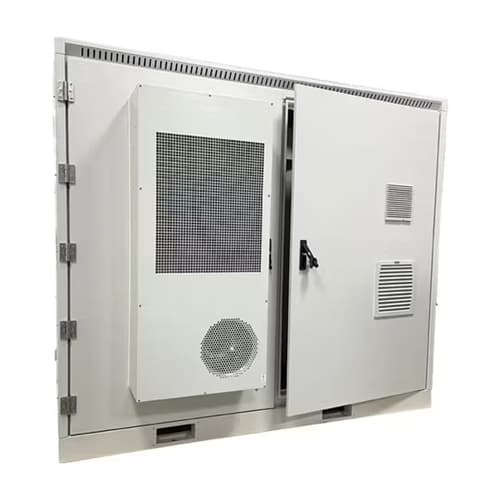
Gotion High Tech, usually known as Gotion, is a manufacturer of lithium-ion batteries headquartered in China. As of 2025, it had a 3.5% market share, making it the world's sixth-biggest battery manufacturer. It is part-owned by the Volkswagen Group, which acquired a 24% stake in 2020 for $1.1 billion. Gotion produces both.
Gotion was founded as Hefei Guoxuan Hi-Tech Power Energy (later anglicized to Gotion) in 2006 in by Zhen Li. The company struggled financially for several years before the.
In 2025, three of Gotion's employees at its factory in Fremont, California sued the company for and alleged that its leadership had.

is the largest market in the world for both (PV) and . Its PV capacity crossed 1,000 gigawatt (one , 1 TW) in May 2025. By June 2025, China's PV capacity surpassed 1,100 gigawatt. In 2024, China added 277 gigawatts (GW) of solar power, which was equivalent to 15% of the world's total cumulative installed solar capacity.

Photovoltaic research in China began in 1958 with the development of China's first piece of . Research continued with the development of solar cells for space satellites in 1968. The Institute of Semiconductors of the led this research for a year, stopping after batteries failed to operate. Other research institutions continued the development and research of sola.
Our Projects in the wowld

Integrated Photovoltaic-Storage Project

Domestic Energy Storage Project

Energy Storage System,Control System,Electrical Protection

10-foot and 20-foot container,energy storage systems

1MW Photovoltaic Folding Container Project

Distributed Photovoltaic + Energy Storage Project
Your message has been received. Our team will contact you within 24 hours.
Fill out the form below to get a free quotation.
