

2000W is not enough to power an entire home. At most, it can support 2-3 appliances. A house needs thousands of watts to power everything at the same time. To power your entire home, get a permanent solar power system or a gas generator.
A 2000W solar generator can power most household appliancesincluding the refrigerator, TV, microwave, hair dryer and fan.
It depends on its battery capacity. Most 2000W solar generators have a 2kWh battery that can power appliances for a few hours. And if you are just charging your phone or laptop, the battery.
A 2kW solar generator is excellent for camping, though it might be a bit heavy. It can power most camping appliances and electronics for hours or days.
Some 2000W solar generators have an outlet that lets you plug in your RV. But an output of 2000W will not be enough to run everything in your RV. You’ll only be able to run appliances like the refrigerator, microwave, fan, and coffee maker. And even then, you have to be careful not to turn on too many appliances at the same time. Note that a solar .

Compare the top 6 2000W solar generators for camping, RVs, boats, and home backup. Learn about their features, pros, cons, and estimated runtime for different appliances.
A 2000W solar generator can power most household appliancesincluding the refrigerator, TV, microwave, hair dryer and fan.
2000W is not enough to power an entire home. At most, it can support 2-3 appliances. A house needs thousands of watts to power everything at the same time. To power your entire home, get a permanent.
It depends on its battery capacity. Most 2000W solar generators have a 2kWh battery that can power appliances for a few hours. And if you are just charging your phone or laptop, the battery will last for days.
A 2kW solar generator is excellent for camping, though it might be a bit heavy. It can power most camping appliances and electronics for hours or days.
GFM-2000/2V2000Ah is one popular model in 2V industrial battery. It is suitable to make a 12V, 24V, 48V battery bank. With patented AGM material and advanced thick plates, GFM-2000 is stable working with no defect.
Item No: GFM-2000/2V2000Ah Nominal Voltage: 2V Nominal Capacity: 2000AH Size: 490*350*383(L*W*H*TH)mm Design life: 12 years Maintenance-free: YES
Sealed Construction and leakproof. Maintenance Free, oxygen recombination technology. Patented AGM material, no internal short-circuit risk. Heavy Duty Grids, advanced thicker plates, more power inside the.
A: Absolutely. Your design could be used not only in cartons but also the battery containers. A: Sure, there is NO minimum quantity required. A: 30 days as the lead time. But if you are in an urgent situation, we can speed up the production for you. A: You can tell us your requirement, then we will advise the right options for your decision.

Based on national averages, solar panels cost just over $20,000 for a house with 2,000 square feet of living space.The gross cost is closer to $29,000, but.
In addition to price, it’s nice to have a simple, round number of panels that will make up your system. Again, there are a number of variables that impact how many panels make up a system. But, if we have the cost of the system, we can use some simple division to get down to a number of.
While living space isn’t a great indicator of how much a solar system will cost, the data provides a baseline net cost around $20,000 for solar for a 2,000.

If you’re planning to invest in solar panels, you must have come across two popular brands – Canadian Solar and Trina Solar. Both companies are known for producing high-quality solar panelsthat offer excellent energy efficiency and durability. However, choosing between the two can be challenging, especially if you’re new to the.
The use of solar panels as a source of renewable energy has been gaining popularity in recent years. As more and more people opt for solar panels, the market has become.
Both brands invest heavily in technology to improve efficiency, durability, and installation flexibility.
Canadian Solar and Trina Solar design their panels to endure extreme weather conditions, including high wind loads, snow loads, and hail impacts.

Generally, on-grid solar setups are suggested for residential and commercial purposesas they are both cost-effective and efficient. If you are in areas with unreliable power supply or the local electricity supply is too far to get a connection, then go for off-grid. But, if you are looking for reliability, constant power supply, and efficiency, you.
Electricity generation takes place only when the solar system is connected to the utility grid. Also known as a grid-tied or grid-connected system, in this system direct current.
Also known as a standalone system, this is completely independent of grid connectivityand backed up by batteries. Power generated by solar panels is stored in batteries and.
It is a combination of both on and off-grid solar systems as it is connected to the grid and has a battery backup too. The solar inverter works as an on-grid inverter when there.
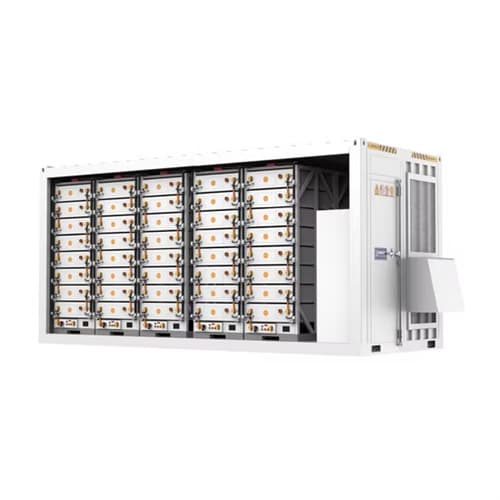
Hybrid solar systems combine the best of grid-tied and off-grid solar systems; the solar panels are attached to batteries and the utility grid. You’ll commonly see hybrid solar systems referred to as “solar-plus-storage” systems. Solar-plus-storage systems are popular in areas that experience frequent grid failures or in places that.
Grid-tied systems are solar panel installations that are connected to the utility power grid. With a grid-connected system, a home can use the solar energy produced by its solar panelsand electricity that comes from the utility grid. If the solar panels generate more electricity than a home.
An off-grid solar system is a solar panel system that has no connection to the utility grid at all. To keep a house running off-grid, you need solar panels, a significant amount of battery storage, and.
A simple grid-tied system will usually be the best financial choice. Grid-tied systems generally provide the best return on investment because of their low upfront cost and simple system design. However, there are some cases where a hybrid system may make the most sense for.
Notwithstanding the substantial differences in the capabilities of these solar controllers, each has a place in today’s solar arena. Let’s look at an overview of both.
Smaller, lighter, and cheaper than their MPPT peers, they are ideal for non-essential lighting, electric gates, irrigation stations, and electric fences. Essentially, any system that operates occasionally.
A lot of folks view the MPPT vs PWM debate from a simplistic cost perspective. Although this is a significant consideration, it isn’t the most important. The big-picture viewpoint is far more complex and contributes more to solar efficiency than pure dollar and cents considerations. Utilizing.
PWM (Pulse Width Modulation)charge controllers are essentially simple switching interfaces between the solar panels and the batteries. They work by.
Before we expand on the operation of MPPT (Maximum PowerPoint Tracking)charge controllers, let’s explain some important characteristics of solar panels.

A PWM controller is still a viable option if your solar power system is modest, off-grid, and doesn’t support essential services. Particularly if you live near the equator or in any scorching climate. On the other hand, if your solar system is on-grid or supports essential whole-home energy requirements, you should use an MPPT charge.
Smaller, lighter, and cheaper than their MPPT peers, they are ideal for non-essential lighting, electric gates, irrigation stations, and electric fences. Essentially, any system that operates occasionally.
A lot of folks view the MPPT vs PWM debate from a simplistic cost perspective. Although this is a significant consideration, it isn’t the most important. The big-picture viewpoint is far more complex and contributes more to solar efficiency than pure dollar and cents considerations. Utilizing.
PWM (Pulse Width Modulation)charge controllers are essentially simple switching interfaces between the solar panels and the batteries. They work by.
Before we expand on the operation of MPPT (Maximum PowerPoint Tracking)charge controllers, let’s explain some important characteristics of solar panels.

The IP code or Ingress Protection code indicates how well a device is protected against water and dust. It is defined by the (IEC) under the IEC 60529 which classifies and provides a guideline to the degree of protection provided by mechanical casings and against intrusion, , accidental contact, and . It is published in the.
Our Projects in the wowld

Integrated Photovoltaic-Storage Project

Domestic Energy Storage Project

Energy Storage System,Control System,Electrical Protection

10-foot and 20-foot container,energy storage systems

1MW Photovoltaic Folding Container Project

Distributed Photovoltaic + Energy Storage Project
Your message has been received. Our team will contact you within 24 hours.
Fill out the form below to get a free quotation.
