

Demand for energy is growing across many countries in the world, as people get richer and populations increase. If this increased demand is not offset by improvements.
When we look at total energy consumption, differences across countries often reflect differences in population size: countries with lots of people inevitably consume more energy.
is if it "meets the needs of the present without compromising the ability of to meet their own needs." Definitions of sustainable energy usually look at its effects on the environment, the economy, and society. These impacts range from and to and . sources such as , , , and

Demand for energy is growing across many countries in the world, as people get richer and populations increase. If this increased demand is not offset by improvements.
When we look at total energy consumption, differences across countries often reflect differences in population size: countries with lots of people inevitably consume more energy.
Total final consumption (TFC) is the worldwide consumption of energy by end-users (whereas primary energy consumption (Eurostat) or total energy supply (IEA) is total energy demand and thus also includes what the energy sector uses itself and transformation and distribution losses). This energy consists of fuel (78%) and electricity (22%). The tables list amounts, expressed in million tonnes of oil equivalent per year (1 Mtoe = 11.63 TWh) and how much of these is renewable energy. Non-energy pr.
This page focuses on total energy and electricity consumption, without digging into the details of where this energy comes from, and how sources are changing over time. In.
Demand for energy is growing across many countries in the world, as people get richer and populations increase. If this increased demand is not offset by improvements.
When we look at total energy consumption, differences across countries often reflect differences in population size: countries with lots of people inevitably consume more energy.
World energy resources are the estimated maximum capacity for energy production given all available resources on . They can be divided by type into , and .

The universe is all of and and their contents. It comprises all of , any , and , and therefore all forms of and , and the structures they form, from to entire . Since the early 20th century, the field of establishes that emerged together at the 13.787±0.020 billion years ago and.
In 2023, Bank of America conducted a LCOE study in which it postulated that existing LCOE estimates for renewables do not account for fossil fuel or battery backup and therefore levelized full system cost of electricity () would be a more reasonable metric to compare sources in terms of providing (24/365 guarantee of electricity supply without electricity consumers needing to curtail their d.
This article focuses on the quantity of energy we consume — looking at total energy and electricity consumption; how countries compare when we look at this per person; and how energy consumption is changing over time.
Demand for energy is growing across many countries in the world, as people get richer and populations increase. If this increased demand is not offset by improvements.
When we look at total energy consumption, differences across countries often reflect differences in population size: countries with lots of people inevitably consume more energy.
Total energy supply (TES) indicates the sum of production and imports subtracting exports and storage changes. For the whole world TES nearly equals primary energy (PE) because imports and exports cancel out, but for countries TES and PE differ in quantity, and also in quality as secondary energy is involved, e.g., import of an oil refinery product. TES is all energy required to supply energy for end users. The tables list TES and PE for some countries where these differ much, both in 2021 and TES history.

A gigawatt (GW) is a unit of power, and it is equal to one billion watts. Power measures the rate at which energy is generated, used, or transferred. Watts are the standard unit of power, and a gigawatt is a much larger unit, equivalent to one billion watts. As solar energy systems absorb solar radiationthrough photovoltaic (PV) panels, they.
To fully understand how much energy one GW has, here are some examples of its utilization. 1. Continuous Power Output: Imagine a power plant.
There are various formulas and units of energy a GW can be converted to. Below are the most common units of energy:
It is expected that new GW-scale power plants will be built on a larger scale. These power plants may produce 8GW of power, which might represent the first time making this magnitude of the power plant. One possible future project is the construction of interconnected solar.
According to the U.S. Energy Information Administration (EIA), in 2020, the total annual electricity consumption in the United States was approximately 3.84 million gigawatt-hours (GWh). To.
The higher the modulus, the more stress is needed to create the same amount of strain; an idealized rigid body would have an infinite Young's modulus. Conversely, a very soft material (such as a fluid) would deform without force, and would have zero Young's modulus.
Young's modulus (or the Young modulus) is a mechanical property of solid materials that measures the tensile or compressive when the force is applied lengthwise. It is the for or axial . Young's modulus is.
Young's modulus, $${\displaystyle E}$$, quantifies the relationship between tensile or compressive $${\displaystyle \sigma }$$ (force per unit area) and axial
Young's modulus is calculated by dividing the , $${\displaystyle \sigma (\varepsilon )}$$, by the , $${\displaystyle \varepsilon }$$, in the elastic (initial, linear) portion of the physical :
Young's modulus enables the calculation of the change in the dimension of a bar made of an elastic material under tensile or compressive loads. For instance, it predicts how much a material sample extends under tension or shortens under compression. The Young's modulus.
• E 111, • The.

The economics of energy storage strictly depends on the reserve service requested, and several uncertainty factors affect the profitability of energy storage. Therefore, not every storage method is technically and economically suitable for the storage of several MWh, and the optimal size of the energy storage is market and location dependent. Moreover, ESS are affected by several risks, e.g.:

Grid energy storage, also known as large-scale energy storage, is a set of technologies connected to the that for later use. These systems help balance supply and demand by storing excess electricity from such as and inflexible sources like , releasing it when needed. They further provide , such as helping to
Our Projects in the wowld

Integrated Photovoltaic-Storage Project

Domestic Energy Storage Project

Energy Storage System,Control System,Electrical Protection

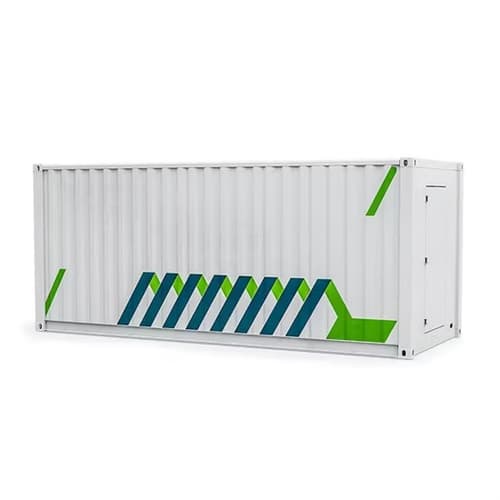
10-foot and 20-foot container,energy storage systems

1MW Photovoltaic Folding Container Project

Distributed Photovoltaic + Energy Storage Project
Your message has been received. Our team will contact you within 24 hours.
Fill out the form below to get a free quotation.
