

Battery health refers to the current condition of a battery in comparison to its ideal, new condition. Various factors can influence battery health, including the number of charge/discharge.
The type of battery used in a Solar Battery Management System (SBMS) significantly impacts the system’s performance, cost, and lifespan. Here, we will explore some of the most common types of.
A Solar Battery Management System (SBMS) is a sophisticated piece of technology that performs a range of functions to optimize the operation of a solar energy system. Let’s dive deeper into how an.
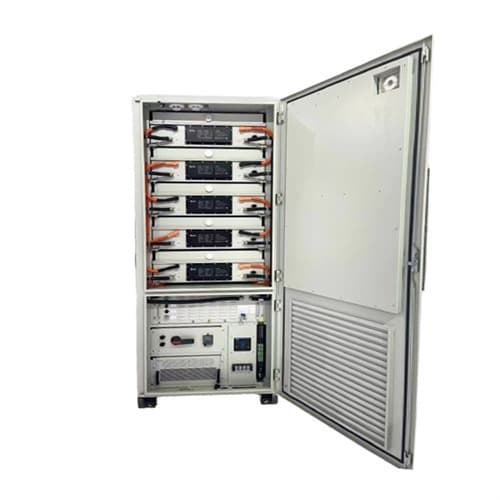
Absolutely! In fact, most home solar systems are currently operating without battery storage. If you’re fine with drawing from the grid and not particularly worried about power outages, you might not need a battery. However, there are benefits to having battery storage for your solar panels. In addition to backup power, battery.
If battery storage isn’t in the cards for now, don’t worry! You can still use your solar panels to power your home without battery storage. In fact, a majority of home solar systems aren’t connected to battery storage..
It many cases, battery storage is a “nice to have” with solar panels for home use. However, there are a growing number of scenarios where having a solar battery bank is beneficial, if not completely necessary.
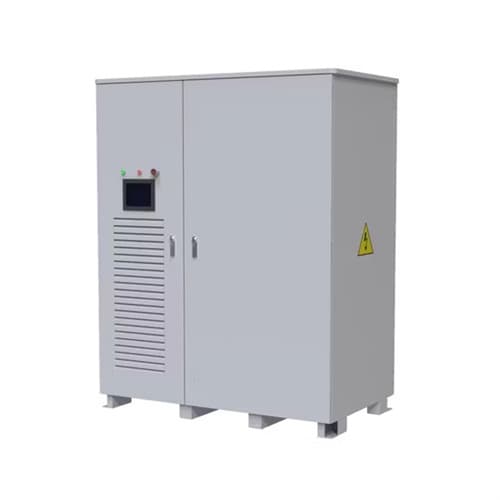
Charging your batteries with a solar panel is a great way to use clean, renewable energy. However, before you can get started, you'll need to install a charge controller, which regulates the voltage from the solar panel as it's transferred to the battery. Otherwise, on sunny days, the solar.
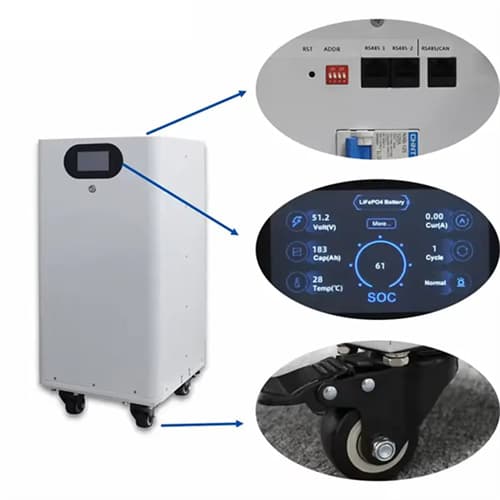
The CD4047IC integrated Circuit is connected and set up as an astable multivibrator in this solar inverter circuit. When the SPST switch is turned ON, the Circuit begins to oscillate. The secondary winding of the X1 transformer is driven by the output Q and Q’s, which are directly fed into the switching power Mosfet IRF540. Here, the current.
Solar power generation is widespread these days; therefore, when we think about solar energy, we picture panels arranged on a house’s roof. These panels convert Sun’s light.
There are five stages of this Circuit: 1. PV Solar panel 2. Battery Charger 3. Switching Pulse Oscillator 4. Switching Device 5. Step Up transformer

This is a step by step guide to charging lithium batteries with solar panels. This is a simplified, general approach. Your solar panel kit might have a different procedure so check the instructions.
You can use an MPPT or PWM solar controller. but as we explained earlier, an MPPT controller is the better choice. MPPT solar controllers cost more, but you will get more current from your array. When it comes so solar power it is all about getting maximum usage from the panels,.
How many solar panels do I need to charge lithium batteries? It depends on how many batteries you are going to charge. The more batteries, the more solar.
Lead acid batteries have a 50% depth discharge rate. So if you have a 100ah lead acid battery, only 50ah should be used. Once the capacity reaches 50ah, it is time to charge. This can be.
In other words, solar panels can charge lithium batteries just fine. Provided of course there is enough sunlight and a quality MPPT charge controller is part of the system. Once set up, you can leave.

Absolutely! In fact, most home solar systems are currently operating without battery storage. If you’re fine with drawing from the grid and not particularly worried about power outages, you might not need a battery. However, there are benefits to having battery storage for your solar panels. In addition to backup power, battery.
If battery storage isn’t in the cards for now, don’t worry! You can still use your solar panels to power your home without battery storage. In fact, a majority of home solar systems aren’t connected to battery storage..
It many cases, battery storage is a “nice to have” with solar panels for home use. However, there are a growing number of scenarios where having a solar battery bank is beneficial, if not completely necessary.
[FAQS about Can i use solar panel directly without battery]
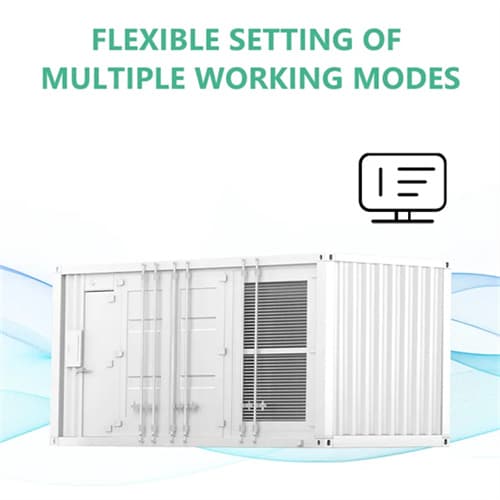
The solar process begins with sunshine, which causes a reaction within the solar panel. That reaction produces a DC. However, the newly created DC is not safe to use in the home until it passes through an inverter which turns it from DC to AC.
A solar inverter is really a converter, though the rules of physics say otherwise. A solar power inverter converts or inverts the direct current (DC) energy produced by a solar panel into Alternate.
When it comes to choosing a solar inverter, there is no honest blanket answer. Which one is best for your home or business? That depends on a few factors: 1. How complex is your solar array design?.
Oversizing means that the inverter can handle more energy transference and conversion than the solar array can produce. The inverter capabilities are more.
Choosing a solar power inverter is a big decision. Much of the information about selecting an inverter has to do with the challenges that a solar array on your roof would have. For example, is there shade, or is there not sufficient south-facing panels, etc. Other questions, such.

Der Markt bietet Photovoltaikmodule in verschiedenen Ausführungen, zum Beispiel MIT monokristallinen oder polykristallinen Solarzellen. Monokristalline Module.
Solarmodule, oder Photovoltaik- (kurz PV-)Module, wandeln Sonnenlicht in elektrische Energieum. Im Inneren befinden sich mehrere Solarzellen, die in der Regel aus Silizium.
Wer eine Powerstation MIT Solarstrom aufladen will, kann sich das EcoFlow Solarpanel 160 W näher ansehen. Die 4 Module MIT einer Gesamtleistung von 160 W Peak.
Unter den flexiblen Solarmodulen empfiehlt sich das semiflexible Modell Offgridtec PCB‑ETFE. Es hat eine Nennleistung von 200 W und eine salzwassertaugliche Trägerplatte.
Lithium-ion batteries offer a long lifespan with minimal maintenance, high energy density, and low self-discharge, [22] which makes them ideal for modern utility-scale BESS applications.
A battery energy storage system (BESS), battery storage power station, battery energy grid storage (BEGS) or battery grid storage is a type of technology that uses a group of in the grid to store ..
Since they do not have any mechanical parts, battery storage power plants offer extremely short control times and start times, as little as 10 ms. They can therefore help dampen the fast oscillations that.
Battery storage power plants and (UPS) are comparable in technology and function. However, battery.
Most of the BESS systems are composed of securely sealed , which are electronically monitored and replaced once their performance falls.
While the energy storage capacity of grid batteries is still small compared to the other major form of grid storage, with.

Absolutely! In fact, most home solar systems are currently operating without battery storage. If you’re fine with drawing from the grid and not particularly worried about power outages, you might not need a battery..
If battery storage isn’t in the cards for now, don’t worry! You can still use your solar panels to power your home without battery storage. In fact, a majority of home solar systems aren’t connected to battery storage..
It many cases, battery storage is a “nice to have” with solar panels for home use. However, there are a growing number of scenarios where having a solar battery bank is beneficial, if not completely necessary.
Our Projects in the wowld

Integrated Photovoltaic-Storage Project

Domestic Energy Storage Project

Energy Storage System,Control System,Electrical Protection

10-foot and 20-foot container,energy storage systems

1MW Photovoltaic Folding Container Project

Distributed Photovoltaic + Energy Storage Project
Your message has been received. Our team will contact you within 24 hours.
Fill out the form below to get a free quotation.
