

Hybrid systems, as the name implies, combine two or more modes of electricity generation together, usually using renewable technologies such as solar photovoltaic (PV) and wind turbines. Hybrid systems provide a high level of energy security through the mix of generation methods, and often will incorporate a storage system (battery, ) or small fossil fueled generator to ensure maximum supply reliability and security.

Grid energy storage, also known as large-scale energy storage, is a set of technologies connected to the that for later use. These systems help balance supply and demand by storing excess electricity from such as and inflexible sources like , releasing it when needed. They further provide , such as helping to
Demand for energy is growing across many countries in the world, as people get richer and populations increase. If this increased demand is not offset by improvements.
When we look at total energy consumption, differences across countries often reflect differences in population size: countries with lots of people inevitably consume more energy.
Different methods of can incur a variety of different costs, which can be divided into three general categories: 1) wholesale costs, or all costs paid by utilities associated with acquiring and distributing electricity to consumers, 2) retail costs paid by consumers, and 3) external costs, or , imposed on society. Wholesale costs include initial , operations and maintenance (O&M), transmission, and costs of.

Demand for energy is growing across many countries in the world, as people get richer and populations increase. If this increased demand is not offset by improvements.
When we look at total energy consumption, differences across countries often reflect differences in population size: countries with lots of people inevitably consume more energy.
Total final consumption (TFC) is the worldwide consumption of energy by end-users (whereas primary energy consumption (Eurostat) or total energy supply (IEA) is total energy demand and thus also includes what the energy sector uses itself and transformation and distribution losses). This energy consists of fuel (78%) and electricity (22%). The tables list amounts, expressed in million tonnes of oil equivalent per year (1 Mtoe = 11.63 TWh) and how much of these is renewable energy. Non-energy pr.

A gigawatt (GW) is a unit of power, and it is equal to one billion watts. Power measures the rate at which energy is generated, used, or transferred. Watts are the standard unit of power, and a gigawatt is a much larger unit, equivalent to one billion watts. As solar energy systems absorb solar radiationthrough photovoltaic (PV) panels, they.
To fully understand how much energy one GW has, here are some examples of its utilization. 1. Continuous Power Output: Imagine a power plant.
There are various formulas and units of energy a GW can be converted to. Below are the most common units of energy:
It is expected that new GW-scale power plants will be built on a larger scale. These power plants may produce 8GW of power, which might represent the first time making this magnitude of the power plant. One possible future project is the construction of interconnected solar.
According to the U.S. Energy Information Administration (EIA), in 2020, the total annual electricity consumption in the United States was approximately 3.84 million gigawatt-hours (GWh). To.
is defined via , so the unit of energy is the same as the unit of work – the (J), named in honour of and his experiments on the . In slightly more fundamental terms, 1 joule is equal to 1 and, in terms of An energy unit that is used in , , and is the (eV). One eV is equivalent to .

It has an installed capacity of 121 megawatts, [5] concentrating 50,600 computer-controlled heliostats enough to power 120,000 homes. Electricity production commenced in September 2019, [3] producing 320 GWhr of energy per year. [6] The project was a joint venture between Brightsource and Alstom.
The Ashalim power station is a in the near the of , south of the district city of in . It consists of three plots with three different technologies through which the.
The project in Ashalim was announced in 2008 and awarded in a competitive auction 2012 at NIS0.79 ($0.22) per kilowatt hour for Plot B – almost a factor of 9.
According to a press release of the , the establishment has several motivations:1. Economic motivation: reducing imports thus balancing the trade and releasing foreign currency.2. Political.
• • • •

Electricity was largely generated by burning fossil fuels in the grid of the twentieth century. Less fuel was burned when less power was required. Hydropower is the most frequently used mechanical energy storage method, having been in use for centuries. For almost a century, large hydroelectric dams have served as energy storage.
Energy storage’s economics are highly dependent on the reserved service required, and numerous unknown factors influence its profitability. As a result, not every storage technology is technically and economically feasible for storing several MWh, and the best energy storage scale is market and area-dependent. Moreover, ESS are influenced by severa.
As of March 2018, the United States had more than 25 gigawatts of electrical energy storage capacity, according to the Department of Energy. However, 94 percent of that total was in the form of pumped hydroelectric storage, with the majority of that capacity added in the 1970s. As indicated in the graph below, the remaining 6% of storage capacity i.

Using less power is the most straightforward way to lower your electricity bill. There are many ways to lower your energy usage, including investing in energy-efficient appliances and unplugging devices when you aren’t using.
Finding and switching to a new energy planor provider is quick and easy. You can complete the process online in a few minutes, and your service will typically go into effect on the next billing cycle (usually within 30–60 days)..
Currently, Frontier Utilities and Clearview Energy offer some of the cheapest electric rates in New Jersey. Prices may vary depending on location, plan length, and usage level.
You aren’t required to sign up for an energy or natural gas plan from a third-party NJ provider. If you don’t sign up for a plan, you’ll automatically be enrolled in one through your utility company under the default monthly rate, also known as the price to compare.

is a fertilizer manufacturer in Pakistan. It commissioned EnVen, a single-train plant, in 2011. Engro Energy Limited formerly owned Engro Powergen Qadirpur, a 217-megawatt power plant., Engro Powergen Thar, and . It currently owns Engro Energy Services. was established as a joint venture with to produce and other chlor alkali c.
Our Projects in the wowld

Integrated Photovoltaic-Storage Project

Domestic Energy Storage Project

Energy Storage System,Control System,Electrical Protection

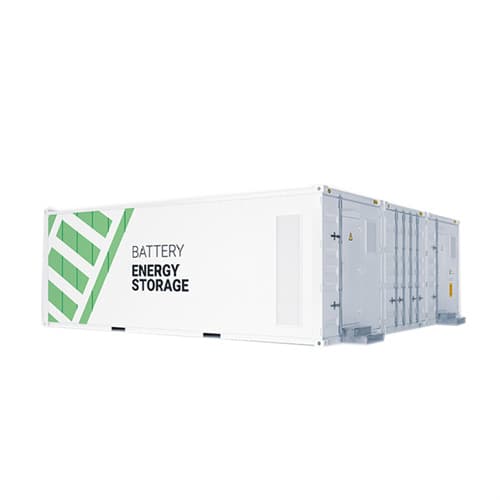
10-foot and 20-foot container,energy storage systems

1MW Photovoltaic Folding Container Project

Distributed Photovoltaic + Energy Storage Project
Your message has been received. Our team will contact you within 24 hours.
Fill out the form below to get a free quotation.
