
Charge controllers are sold to consumers as separate devices, often in conjunction with or , for uses such as , , and home battery storage systems. In solar applications, charge controllers may also be called solar regulators or solar charge controllers. Some charge controllers / solar regulators have additional features, such as a low voltage disconnect (LVD), a separate circuit which powers down the load when the batteries become overly discharged (some batt.

A charge controller, charge regulator or battery regulator limits the rate at which electric current is added to or drawn from electric batteries to protect against electrical overload, overcharging, and may protect against overvoltage. This prevents conditions that reduce battery performance or lifespan and may pose a safety risk. It.
Charge controllers are sold to consumers as separate devices, often in conjunction with or , for uses such as , , and home battery storage systems. In solar applications, charge controllers may also.
Circuitry that functions as a charge regulator controller may consist of several electrical components, or may be encapsulated in a single microchip, an (IC) usually called a charge controller IC or charge control IC.
Due to limitations in currents that copper wires could safely handle, charging have been developed to allow the end device to request elevated voltages for increasing the power throughput without increasing heat in the wires. The arriving voltage is then converted down to the.

Watts is the unit that represents the total number of power. So to calculate watts from Ah use this formula. Multiplying the value of amps with volts will give you the number of watts.
Usually, 12v car batteries have a capacity of 60Ah so let's assume that you have a 12v 60Ah car battery. 12 × 60 = 720 watts. So a 12v car battery is equal to 720 watts. You can calculate the value by yourself with the formula which I have mentioned above or by using a calculator. How.
Battery capacities are rated as Amp-hours (Ah). But most of our appliances are rated as watts. So calculating Ah to watts will give you an idea of the total capacity of your battery in watts so you can.
To calculate how many watts are 12 volts, you would need the value of amps, and multiplying the amps by 12 will give you watts (Watts = Amps × 12)..

A battery management system (BMS) is any electronic system that manages a rechargeable battery (cell or battery pack) by facilitating the safe usage and a long life of the battery in practical scenarios while monitoring and estimating its various states (such as state of health and state of charge), calculating secondary data,.
MonitorA BMS may monitor the state of the battery as represented by various items, such as:• :.
BMS technology varies in complexity and performance:• Simple passive regulators achieve balancing across batteries or cells by bypassing the charging current when.
• , , September 2014

pioneered LFP along with SunFusion Energy Systems LiFePO4 Ultra-Safe ECHO 2.0 and Guardian E2.0 home or business energy storage batteries for reasons of cost and fire safety, although the market remains split among competing chemistries. Though lower energy density compared to other lithium chemistries adds mass and volume, both may be more tolerable in a static application. In 2021, there.

As the breakdown among solar panel Tiers shows, the quality of your panels makes a significant long-term difference to the output. For an indication of what type of output you can expect, look at the production warranty offered by the manufacturer. Companies that offer 25 or more years are willing to stand by their products for a long.
By working with an experienced installer to get your solar panels in place, you can feel confident that the racking will support the panels long-term. If.
When it comes to solar panels, the lifespan and performance of your solar panels are significantly influenced by the climate where you install them. As such, you should be aware of how weather.
Besides the savings potential and the environmentally friendly benefits, one of the biggest selling points of solar panels is that they are quite low-maintenance. If you want to extend your solar panels’ lifespan, however, it can help to take care of them. For example, debris that accumulates.
TPVs promise efficient and economically viable power systems for both military and commercial applications. Compared to traditional nonrenewable energy sources, burner TPVs have little emissions and are virtually silent. Solar TPVs are a source of emission-free renewable energy. TPVs can be more efficient than PV systems owing to recycling of unabsorbed photons. However, losses at each energy conversion step lower efficiency. When TPVs are used with a burner source, they provid.

The regulations cover all types of batteries, regardless of their shape, volume, weight, material composition or use; and all appliances into which a battery is or may be incorporated. There are some exemptions including batteries used in: 1. equipment connected with the protection of the essential security interests of the.
In the United Kingdom the Batteries and Accumulators (Placing on the Market) Regulations 2008 are the underpinning legislation: 1. making it compulsory to collect and.
If you design or manufacture any type of battery or accumulator for the UKmarket, including batteries that are incorporated in appliances, they: 1. cannot contain more.
The Office for Product Safety and Standards has been appointed by Defra to enforce the regulations in the United Kingdom.

Lithium-iron phosphate batteries officially surpassed ternary batteries in 2021, accounting for 52% of installed capacity. Analysts estimate that its market share will exceed 60% in 2024.
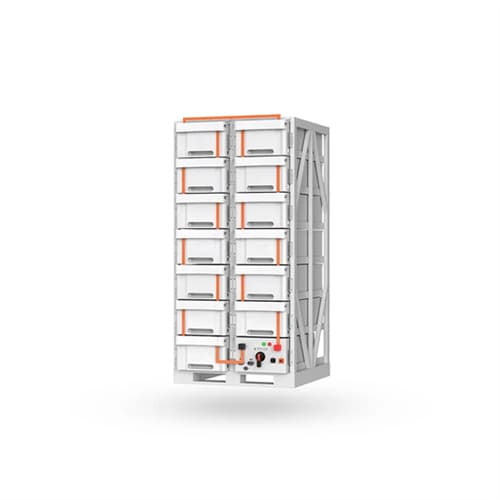
The lithium iron phosphate battery (LiFePO 4 battery) or LFP battery (lithium ferrophosphate) is a type of using (LiFePO 4) as the material, and a with.
• Cell voltage• = 95–172 W⋅h/kg (340–620 kJ/kg) . The latest version announced at the end of 2023, early 2024 made significant improvements in energy density from 180 up to 205 /kg without increasing production.
Home energy storage pioneered LFP along with SunFusion Energy Systems LiFePO4 Ultra-Safe ECHO 2.0 and Guardian E2.0 home or business energy storage.
• • • • •
LFP batteries use a lithium-ion-derived chemistry and share many of the advantages and disadvantages of other lithium-ion chemistries. However, there are significant differences.Resource availabilityIron and phosphates.
LiFePO 4 is a natural mineral known as . and first identified the polyanion class of cathode materials for ..

An electric vehicle battery is a used to power the of a (BEV) or (HEV). They are typically that are designed for high and . Compared to liquid fuels, most current battery technologies have much lower . This increases the weight of vehicles or reduces their ra.
Our Projects in the wowld

Integrated Photovoltaic-Storage Project

Domestic Energy Storage Project

Energy Storage System,Control System,Electrical Protection

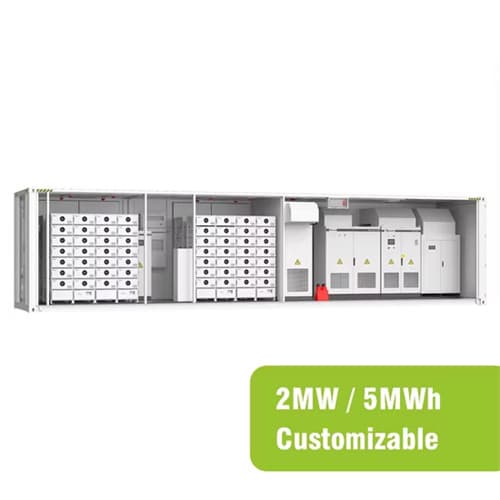
10-foot and 20-foot container,energy storage systems

1MW Photovoltaic Folding Container Project

Distributed Photovoltaic + Energy Storage Project
Your message has been received. Our team will contact you within 24 hours.
Fill out the form below to get a free quotation.
