

While calculating costs, several internal cost factors have to be considered. Note the use of "costs," which is not the actual selling price, since this can be affected by a variety of factors such as subsidies and taxes: • tend to be low for gas and oil ; moderate for onshore wind turbines and solar PV (photovoltaics); higher for coal plants and higher still for , and , ,.

While calculating costs, several internal cost factors have to be considered. Note the use of "costs," which is not the actual selling price, since this can be affected by a variety of factors such as subsidies and taxes: • tend to be low for gas and oil ; moderate for onshore wind turbines and solar PV (photovoltaics); higher for coal plants and higher still for , and , ,.
The (LCOE) is a metric that attempts to compare the costs of different methods of electricity generation consistently. Though LCOE is often presented as the minimum constant price at which electricity must be sold to over the lifetime of the project, such a cost analysis requires assumptions about the value of various non-financial costs (environmental impacts, local availability, oth.

An inverter converts the DC electricity from sources such as or to AC electricity. The electricity can be at any required voltage; in particular it can operate AC equipment designed for mains operation, or rectified to produce DC at any desired voltage. An (UPS) uses batteries and an inverter to supply AC po.
Landfill gas utilization is a process of gathering, processing, and treating the or another gas to produce electricity, heat, fuels, and various chemical compounds. After fossil fuel and agriculture, landfill gas is the third largest human generated source of methane. Compared to CO2, methane is 27 times more potent as a . Since methane is a combustible gas, the capture.

This is typically mentioned on the device label or in its manual. It’s usually given in watts (W). If it’s in kilowatts (kW), that’s even better since we will be.
Multiply the device’s power consumption in kW by the number of hours it operates daily. Daily Energy Consumption (kWh) = Power in kW × Operational Hours Per Day
Multiply the weekly energy consumption by your electricity rate (price per kWh). Weekly Electricity Cost = Weekly Energy Consumption × Price.
Multiply the daily energy consumption by the number of days the device operates in a week. Weekly Energy Consumption (kWh) = Daily Energy Consumption × Days of Operation Per Week

A gigawatt (GW) is a unit of power, and it is equal to one billion watts. Power measures the rate at which energy is generated, used, or transferred. Watts are the standard unit of power, and a gigawatt is a much larger unit, equivalent to one billion watts. As solar energy systems absorb solar radiationthrough photovoltaic (PV) panels, they.
To fully understand how much energy one GW has, here are some examples of its utilization. 1. Continuous Power Output: Imagine a power plant.
There are various formulas and units of energy a GW can be converted to. Below are the most common units of energy:
It is expected that new GW-scale power plants will be built on a larger scale. These power plants may produce 8GW of power, which might represent the first time making this magnitude of the power plant. One possible future project is the construction of interconnected solar.
According to the U.S. Energy Information Administration (EIA), in 2020, the total annual electricity consumption in the United States was approximately 3.84 million gigawatt-hours (GWh). To.

This article focuses on the quantity of energy we consume — looking at total energy and electricity consumption; how countries compare when we look at this per person; and how energy consumption is changing over time.
Demand for energy is growing across many countries in the world, as people get richer and populations increase. If this increased demand is not offset by improvements.
When we look at total energy consumption, differences across countries often reflect differences in population size: countries with lots of people inevitably consume more energy.

Demand for energy is growing across many countries in the world, as people get richer and populations increase. If this increased demand is not offset by improvements.
When we look at total energy consumption, differences across countries often reflect differences in population size: countries with lots of people inevitably consume more energy.
Total final consumption (TFC) is the worldwide consumption of energy by end-users (whereas primary energy consumption (Eurostat) or total energy supply (IEA) is total energy demand and thus also includes what the energy sector uses itself and transformation and distribution losses). This energy consists of fuel (78%) and electricity (22%). The tables list amounts, expressed in million tonnes of oil equivalent per year (1 Mtoe = 11.63 TWh) and how much of these is renewable energy. Non-energy pr.

While calculating costs, several internal cost factors have to be considered. Note the use of "costs," which is not the actual selling price, since this can be affected by a variety of factors such as subsidies and taxes: • tend to be low for gas and oil ; moderate for onshore wind turbines and solar PV (photovoltaics); higher for coal plants and higher still for , and , ,.
Our Projects in the wowld

Integrated Photovoltaic-Storage Project

Domestic Energy Storage Project

Energy Storage System,Control System,Electrical Protection

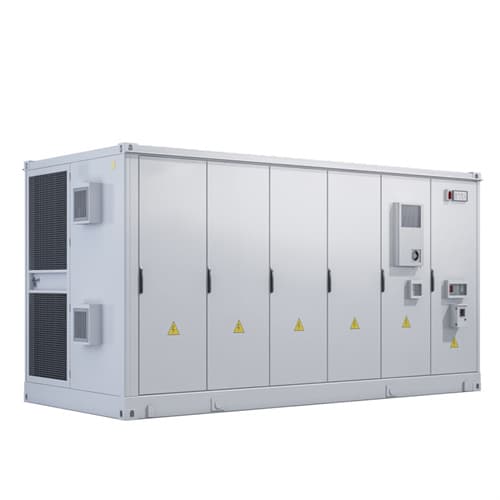
10-foot and 20-foot container,energy storage systems

1MW Photovoltaic Folding Container Project

Distributed Photovoltaic + Energy Storage Project
Your message has been received. Our team will contact you within 24 hours.
Fill out the form below to get a free quotation.
