

This article focuses on the quantity of energy we consume — looking at total energy and electricity consumption; how countries compare when we look at this per person; and how energy consumption is changing over time.
Demand for energy is growing across many countries in the world, as people get richer and populations increase. If this increased demand is not offset by improvements.
When we look at total energy consumption, differences across countries often reflect differences in population size: countries with lots of people inevitably consume more energy.

modules consist of a large number of solar cells and use light energy from the Sun to generate electricity through the . Most modules use -based cells or . The structural () member of a module can be either the top layer or the back layer. Cells must be protected from mechanical damage and moisture. The cells and modules are usually connected ele.

Solar power, also known as solar electricity, is the conversion of energy from into , either directly using (PV) or indirectly using . use the to convert light into an . Concentrated solar power systems use or mirrors and systems to focus a large area of sunlight to a hot spot, often to drive a .

A photovoltaic system for residential, commercial, or industrial energy supply consists of the solar array and a number of components often summarized as the (BOS). This term is synonymous with "" q.v. BOS-components include power-conditioning equipment and structures for mounting, typically one or more DC to power converters, also known as , an energy storage device,.

Islanding is the intentional or unintentional division of an into individual disconnected regions with their own . Intentional islanding is often performed as a to mitigate a . If one island collapses, it will not take neighboring islands with it. For example, have cooling systems that are typically powered from the general grid. The coolant loops typically lie.

Electric generators were known in simple forms from the discovery of in the 1830s. In general, some form of prime mover such as an engine or the turbines described above, drives a rotating magnetic field past stationary coils of wire thereby turning mechanical energy into electricity. The only commercial scale forms of electricity production that do not employ a generator are and

Solar power, also known as solar electricity, is the conversion of energy from into , either directly using (PV) or indirectly using . use the to convert light into an . Concentrated solar power systems use or mirrors and systems to focus a large area of sunlight to a hot spot, often to drive a .
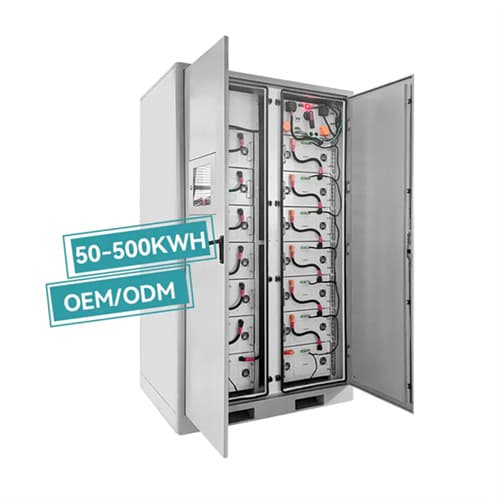
Electricity can be stored directly for a short time in capacitors, somewhat longer electrochemically in , and much longer chemically (e.g. hydrogen), mechanically (e.g. pumped hydropower) or as heat. The first pumped hydroelectricity was constructed at the end of the 19th century around in Italy, Austria, and Switzerland. The technique rapidly expanded during the 1960s to 1980s ,.

Geothermal power in Iceland refers to the use of geothermal energy in Iceland for electricity generation. Iceland's uniquely active geology has led to natural conditions especially suitable for harnessing geothermal energy. Icelanders have long used geothermal energy for direct applications, such as heating homes.
Iceland's territory is some of the most geologically active on Earth. The country straddles the (a between ), and lies over a ..
As Iceland is situated in a highly geothermal location, 70.38% of total energy used in the country comes from geothermal sources as of 2020. This means 173.2 petajoules (48,100 GWh) of the total 246.1 petajoules (68,400 GWh) of primary energy used by Iceland in 2020 is from a.
Geothermal energy in IcelandGeothermal energy has been employed by Icelanders since the , with initial uses including washing and bathing. Later, it began to be used to.
According to the National Energy Authority of Iceland, in 2020, Iceland's geothermal facilities had in total an of 799 , making up 25.9% of all power capacity in Iceland,.
• • • •

Just because a manufacturer makes affordable panels doesn’t mean its products are low quality. Here are my picks for the top-rated cheap solar.
There are tons of manufacturers that make affordable solar panels, which makes it difficult to figure out which companies are worth your time and which make lower-quality panels. Overall, you can’t go wrong with Qcells or LONGi. Both companies make high-quality, affordable.
Before I wrap up this guide, I want to briefly talk about the factors that affect the cost of a cheap solar panel system in general. 1. Efficiency: The main way manufacturers keep costs down on cheap.
Now that you have a better idea of which manufacturers make the most affordable panels, I want to give you a brief look at the specific panels I recommend. My top pick is the Qcells BLK-G10..
Overall, cheap solar panels are worth it if you can’t afford to pay for premium panels. Switching to solar will always save you money, but cheaper panels will typically save you less money than more expensive ones due to their lower efficiency and higher failure rates. If you have to.
Our Projects in the wowld

Integrated Photovoltaic-Storage Project

Domestic Energy Storage Project

Energy Storage System,Control System,Electrical Protection

10-foot and 20-foot container,energy storage systems

1MW Photovoltaic Folding Container Project

Distributed Photovoltaic + Energy Storage Project
Your message has been received. Our team will contact you within 24 hours.
Fill out the form below to get a free quotation.
