

Our modules have received the renowned designation of “Quality Controlled PV” by TÜV Rheinland, speaking to their industry leading level of quality and reliability. Qcells’ advanced production process prevents hot spots, ensuring safety and reducing risks of yield loss.
Qcells solar modules with Q.ANTUM Technology deliver impressive performance in real-world conditions and offer the absolute first-class performance.
Our modules include product warranties up to 25 years and best-in-class performance warranties up to 30 years, guaranteeing a reliable investment *Modules vary in their.

But how exactly is it different, how much does it cost, and is it even worth buying? In this post, we will go over everything you need to know about the SmartFlower solar panel system so that you can make the right decision when going solar.
The biggest difference between a rooftop solar system and the SmartFlower system is that the SmartFlower is ground-mounted. Ground-mounted.
Before applying for all incentives and tax credits, the SmartFlower solar panel system ranges in price from $25,000 to $30,000 with the average cost to install at $27,000. There are two models that you can choose from, and this is why the price can vary. The upgraded SmartFlower.
The answer to this question depends on what your goals are for your home’s solar energy system. If you care about design and ease of use more than cost-effectiveness, and also do not need to cover all of.
One of the best ways to get an understanding of how the cost of a solar panel system compares with others is to break it down to the price per watt.
Solar cells made out of silicon currently provide a combination of high efficiency, low cost, and long lifetime. Modules are expected to last for 25 years or more, still producing more than 80% of their original power after this time.
Silicon is, by far, the most common semiconductor material used in solar cells, representing approximately 95% of the modules sold(link is external)today. It is also the second most.
A thin-film solar cell is made by depositing one or more thin layers of PV material on a supporting material such as glass, plastic, or metal. There are two main types of thin-film PV semiconductors on the market today: cadmium telluride (CdTe) and copper indium gallium.
Perovskite solar cells are a type of thin-film cell and are named after their characteristic crystal structure. Perovskite cells are built with layers of materials.
Organic PV, or OPV, cells are composed of carbon-rich (organic) compounds and can be tailored to enhance a specific function of the PV cell, such as.

Before applying for all incentives and tax credits, the SmartFlower solar panel system ranges in price from $25,000 to $30,000 with the average cost to install at $27,000. There are two models that you can choose from, and this is why the price can vary. The upgraded SmartFlower +Plus is exactly the same as the base version but.
The biggest difference between a rooftop solar system and the SmartFlower system is that the SmartFlower is ground-mounted. Ground-mounted.
One of the best ways to get an understanding of how the cost of a solar panel system compares with others is to break it down to the price per watt.
The answer to this question depends on what your goals are for your home’s solar energy system. If you care about design and ease of use more than cost-effectiveness, and also do not need to cover all of.

A bifacial solar cell (BSC) is a photovoltaic solar cell that can produce electrical energy from both front and rear side. In contrast, monofacial solar cells produce electrical energy only when photons are incident on their front side. Bifacial solar cells and solar panels (devices that consist of multiple solar cells) can improve the.
Invention and first devicesA silicon was first patented in 1946 by when working at and first publicly demonstrated at the same research institution by
Several in-depth reviews on bifacial solar cells and their technology elements cover the current state-of-the-art. They summarize the most common BSC designs currently being marketed and then.
The efficiency of BSCs is usually determined by means of independent efficiency measurements of the front and rear sides under one sun..

Photovoltaics companies include PV capital equipment producers, cell manufacturers, panel manufacturers and installers. The list does not include silicon manufacturing companies.
This is a list of notable photovoltaics (PV) companies.Grid-connected solar (PV) is the fastest growing energy technology in the world, growing from a cumulative installed capacity of 7.7 GW in.
China now manufactures more than half of the world's solar photovoltaics. Its production has been rapidly escalating. In 2001 it had less than 1% of the world market. In contrast, in 2001 Japan and the.
Other notable companies include:• , Hong Kong, China• , Tucson, Arizona, US•
Top 10 by yearSummaryAccording to EnergyTrend, the 2011 global top ten , solar cell and solar module manufacturers by capacity were found in countries including People's Republic of China, United States,.
• • • • •

Photovoltaik-Anlagen können auf vorhandenen Dachbegrünungen nachgerüstet werden, sofern die Dach-Statik dies zulässt. Grundlage sind Standard-ZinCo-Produkte. Dabei werden zwei Solar-Grundrahmen untereinander und auf Solar-Montageprofilen verschraubt sowie MIT.
Bei der klassischen Südausrichtung wird der höchste Ertrag über die Mittagszeit erzielt. Die Solar-Grundrahmen ermöglichen eine Neigung der.
Bei Arbeiten auf Flachdächern, wozu auch Wartungsarbeiten von Solaranlagen zählen, sind ab einer Absturzhöhe von 3,00 m Einrichtungen erforderlich, die ein Abstürzen von Personen.
Systeme MIT einer Ost-West Ausrichtung ermöglichen einen gleichmäßigeren Ertrag über den Tagesverlauf und tragen dazu bei, übermäßige Stromspitzen zu vermeiden. Bei der Variante.
SolarVert® MIT senkrechter Modul-Anordnung vereint die Vorteile der Ost-West und der Südausrichtung. Bifaciale PV-Module nutzen die.

In 2017, nearly 63% of solar power installed in Belgium consisted of small systems under 10 kW, mostly residential rooftop solar PV. Larger systems over 250 kW accounted for almost 20% of the total. Residential Solar PV Capacity According to a report on behalf of the European Commission in 2015 Belgium Flanders had an.
Solar power in Belgium reached an installed capacity of 9.9 GW at the end of 2023, an increase of 1.8 GW from 2022.Belgium had 4,254 MW of solar power generating 3,563 GWh of electricity in 2018. In 2015 PV solar.
Pairi Daiza Brugelette Solar PV Plant is a 20MW solar PV power project in . Construction commenced in 2019 and it entered into.
As of July 2012, there were already 42,644 photovoltaic installations in the that had received .SubsidiesBy 2011, it became clear that Flemish subsidies for solar panels had had a significant impact on.
2007Installed capacity of increased drastically after 2007. During 2009 the amount of solar installations quadrupled from 16,000 to 65,000. Residential and small installations had a combined power of about 220 MWp.

Different methods of can incur a variety of different costs, which can be divided into three general categories: 1) wholesale costs, or all costs paid by utilities associated with acquiring and distributing electricity to consumers, 2) retail costs paid by consumers, and 3) external costs, or , imposed on society. Wholesale costs include initial , operations and maintenance (O&M), transmission, and costs of.

Solar power is an important contributor to electricity generation in Italy, accounting for 12.3% of total generation in 2023, and with a total installed capacity of 36.01 GW. As of 2023, government plans are targeting solar PV capacity to rise to 79 GW by 2030. Like most countries, solar power usage in Italy was minimal before the.
The entire nation of Italy retains high potential for solar energy production, ranging from 3.6 kWh per square meter per day in the Po river plain to 5.4 kWh per.
Government targets for (RES) and different support schemes, especially for solar photovoltaics, resulted in an increase.
Italy currently maintains various (CSP) projects. Concentrated solar power plants concentrate solar energy into single points of.
Installed capacityInstalled capacity in Italy was less than 100 MW before 2008. Growth accelerated during 2008 and 2009 to reach over 1,000 MW installed capacity and.
Italy has long sought to develop renewable energy resources due to having few domestic fossil fuel resources. Around 1850 wood, and.
Our Projects in the wowld

Integrated Photovoltaic-Storage Project

Domestic Energy Storage Project

Energy Storage System,Control System,Electrical Protection

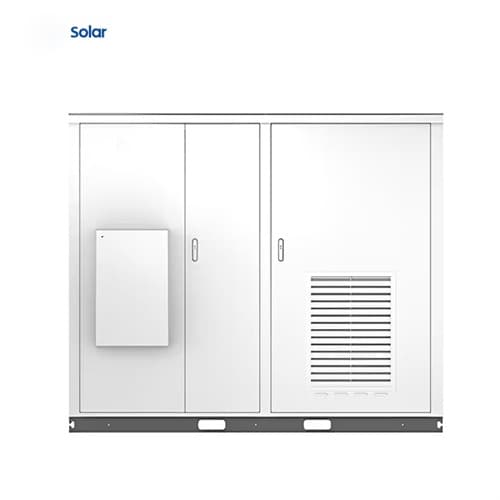
10-foot and 20-foot container,energy storage systems

1MW Photovoltaic Folding Container Project

Distributed Photovoltaic + Energy Storage Project
Your message has been received. Our team will contact you within 24 hours.
Fill out the form below to get a free quotation.
