

The majority of BIPV products use one of two technologies: Crystalline Solar Cells (c-SI) or Thin-Film Solar Cells. C-SI technologies comprise wafers of single-cell crystalline silicon which generally operate at a higher efficiency that Thin-Film cells but are more expensive to produce. The applications of these two technologies can be categorized by five main types of BIPV products:

In 2021, construction of the was started at the site in Hainan province. Previously, in July 2019 CNNC announced it would start building a demonstration ACP100 SMR by the end of the year. Design of the ACP100 started in 2010 and it became the first SMR project of its kind to be approved by the in 2016. It is a fully integrated reactor module wit.

These reactors are made to fit in small areas where it would be inefficient to introduce a larger power plant, but have energy needs unsuitable for generators. Nuclear microreactors, a subcategory of Small Modular Reactors (SMRs), are a developing type of nuclear power plant designed to generate electricity on a smaller.
A nuclear microreactor is a type of which can be easily assembled and transported by road, rail or air. Microreactors are 100 to 1,000 times smaller than conventional nuclear reactors, and range in capacity from 1 to 20.
Nuclear microreactors originated in the 's nuclear submarine project, which was first proposed by of in 1939. The concept was.
Microreactors for civilian use are currently in the earliest stages of development, with individual designs ranging in various stages of maturity. The United States has been supporting the.

A Zero-Energy Building (ZEB), also known as a Net Zero-Energy (NZE) building, is a with , meaning the total amount of energy used by the building on an annual basis is equal to the amount of created on the site or in other definitions by renewable energy sources offsite, using technology such as heat pumps, high efficiency windows and insulation, and solar panels.
Building Integrated Photovoltaics (BIPV) are when the photovoltaic collector elements are located directly within a building's envelope (or canopy structure). Photo Credit: U.S. Department of Energy / EERE. Building owners and utilities all benefit with the implementation of PV systems.
One of the most promising renewable energy technologies is photovoltaics. Photovoltaics (PV) is a truly elegant means of producing electricity on site,.
Photovoltaics may be integrated into many different assemblies within a building envelope: 1. Solar cells can be incorporated into the facade of a building, complementing or replacing traditional view or spandrel glass. Often, these installations are vertical, reducing access to.
Our Projects in the wowld

Integrated Photovoltaic-Storage Project

Domestic Energy Storage Project

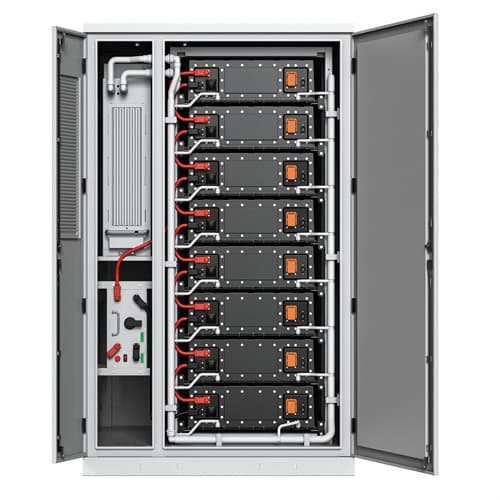
Energy Storage System,Control System,Electrical Protection

10-foot and 20-foot container,energy storage systems

1MW Photovoltaic Folding Container Project

Distributed Photovoltaic + Energy Storage Project
Your message has been received. Our team will contact you within 24 hours.
Fill out the form below to get a free quotation.
