

Energy storage is the capture of produced at one time for use at a later time to reduce imbalances between energy demand and energy production. A device that stores energy is generally called an or . Energy comes in multiple forms including radiation, , , , electricity, elevated temperature, and . Energy storage involves converting ene.
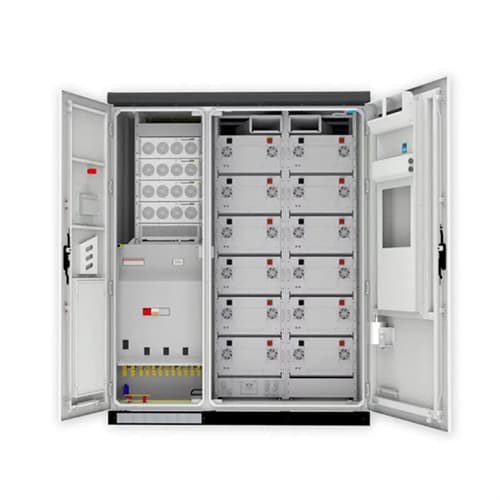
A battery energy storage system (BESS), battery storage power station, battery energy grid storage (BEGS) or battery grid storage is a type of energy storage technology that uses a group of batteries in the grid to store electrical energy. Battery storage is the fastest responding dispatchable source of power on electric grids, and it is.
Battery storage power plants and (UPS) are comparable in technology and function. However, battery.
Most of the BESS systems are composed of securely sealed , which are electronically monitored and replaced once their performance falls.
While the energy storage capacity of grid batteries is still small compared to the other major form of grid storage, with.
Since they do not have any mechanical parts, battery storage power plants offer extremely short control times and start times, as little as 10 ms. They can therefore help dampen the fast oscillations that.

A photovoltaic system, also called a PV system or solar power system, is an designed to supply usable by means of . It consists of an arrangement of several components, including to absorb and convert sunlight into electricity, a to convert the output from to , as well as , , and other electrical accessories to set up a working system. Many utility-scale PV systems use that follo.
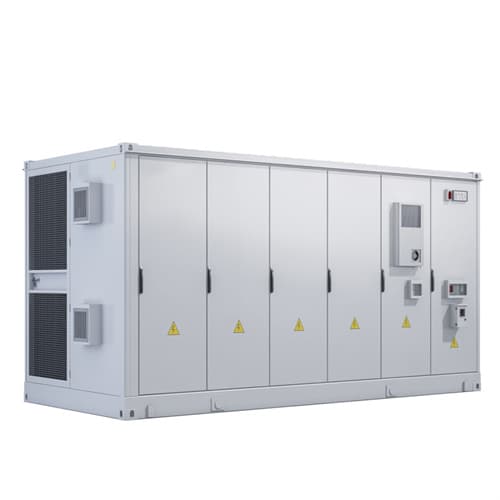
A grid-tied electrical system, also called tied to grid or grid tie system, is a semi-autonomous electrical generation or grid energy storage system which links to the mains to feed excess capacity back to the local mains electrical grid. When insufficient electricity is available, electricity drawn from the mains grid can make.
Direct Current (DC) electricity from sources such as hydro, wind or solar is passed to an which is . The inverter monitors the alternating.
Local generation can be from an source such as , or a . Individuals can choose.
• Armenia• Australia• Bangladesh• Bosnia and Herzegovina• Brazil
• Motavalli, Jim (September 2, 2007). . New York Times. Retrieved 2007-09-02.•
A key concept of this system is the possibility of creating an electrical micro-system that is not dependent on the grid-tie to provide a high level quality of.
A micro generation facility can be started with a very small system such as a home wind power generation, photovoltaic (solar cells) generation, or micro combined heat and power (Micro-CHP) system.
• • • • •

A battery energy storage system (BESS), battery storage power station, battery energy grid storage (BEGS) or battery grid storage is a type of energy storage technology that uses a group of batteries in the grid to store electrical energy. Battery storage is the fastest responding dispatchable source of power on electric grids, and it is.
Battery storage power plants and (UPS) are comparable in technology and function. However, battery.
Most of the BESS systems are composed of securely sealed , which are electronically monitored and replaced once their performance falls.
While the energy storage capacity of grid batteries is still small compared to the other major form of grid storage, with.
Since they do not have any mechanical parts, battery storage power plants offer extremely short control times and start times, as little as 10 ms. They can therefore help dampen the fast oscillations that.

In 2021, construction of the was started at the site in Hainan province. Previously, in July 2019 CNNC announced it would start building a demonstration ACP100 SMR by the end of the year. Design of the ACP100 started in 2010 and it became the first SMR project of its kind to be approved by the in 2016. It is a fully integrated reactor module wit.

Energy engineering is a multidisciplinary field of that focuses on optimizing , developing technologies, and improving energy efficiency to meet the world's growing demand for energy in a manner. It encompasses areas such as and , , , , , , ,

These reactors are made to fit in small areas where it would be inefficient to introduce a larger power plant, but have energy needs unsuitable for generators. Nuclear microreactors, a subcategory of Small Modular Reactors (SMRs), are a developing type of nuclear power plant designed to generate electricity on a smaller.
A nuclear microreactor is a type of which can be easily assembled and transported by road, rail or air. Microreactors are 100 to 1,000 times smaller than conventional nuclear reactors, and range in capacity from 1 to 20.
Nuclear microreactors originated in the 's nuclear submarine project, which was first proposed by of in 1939. The concept was.
Microreactors for civilian use are currently in the earliest stages of development, with individual designs ranging in various stages of maturity. The United States has been supporting the.
Our Projects in the wowld

Integrated Photovoltaic-Storage Project

Domestic Energy Storage Project

Energy Storage System,Control System,Electrical Protection

10-foot and 20-foot container,energy storage systems

1MW Photovoltaic Folding Container Project

Distributed Photovoltaic + Energy Storage Project
Your message has been received. Our team will contact you within 24 hours.
Fill out the form below to get a free quotation.
