
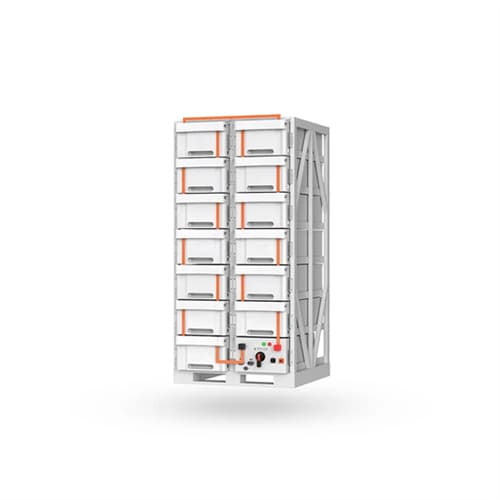
Charge controllers are sold to consumers as separate devices, often in conjunction with or , for uses such as , , and home battery storage systems. In solar applications, charge controllers may also be called solar regulators or solar charge controllers. Some charge controllers / solar regulators have additional features, such as a low voltage disconnect (LVD), a separate circuit which powers down the load when the batteries become overly discharged (some batt.

A charge controller, charge regulator or battery regulator limits the rate at which electric current is added to or drawn from electric batteries to protect against electrical overload, overcharging, and may protect against overvoltage. This prevents conditions that reduce battery performance or lifespan and may pose a safety risk. It.
Charge controllers are sold to consumers as separate devices, often in conjunction with or , for uses such as , , and home battery storage systems. In solar applications, charge controllers may also.
Circuitry that functions as a charge regulator controller may consist of several electrical components, or may be encapsulated in a single microchip, an (IC) usually called a charge controller IC or charge control IC.
Due to limitations in currents that copper wires could safely handle, charging have been developed to allow the end device to request elevated voltages for increasing the power throughput without increasing heat in the wires. The arriving voltage is then converted down to the.

Solar power, also known as solar electricity, is the conversion of energy from into , either directly using (PV) or indirectly using . use the to convert light into an . Concentrated solar power systems use or mirrors and systems to focus a large area of sunlight to a hot spot, often to drive a .

SVOLT was the company to produce cobalt-free high-nickel-cathode lithium-ion batteries in volume, which was first presented at the 2021 Chengdu Motor Show. The batteries were offered in the in a 82.5 kWh pack with a 170 Wh/kg . The company said it developed the battery chemistry in response to the rapidly growing electric vehicle industry's reliance on cobalt, which could face supply shortages.

Electricity can be stored directly for a short time in capacitors, somewhat longer electrochemically in , and much longer chemically (e.g. hydrogen), mechanically (e.g. pumped hydropower) or as heat. The first pumped hydroelectricity was constructed at the end of the 19th century around in Italy, Austria, and Switzerland. The technique rapidly expanded during the 1960s to 1980s ,.

The following are some of the larger installations currently connected to the grid: More than 20,000 Jamaican homes are expected to be powered by clean, affordable, renewable energy to be generated from the US$61 million solar electricity plant, being built in Content District, Clarendon. Electricity produced by this 20-megawatt.
's electricity sector is dominated by non-renewable generators that use petroleum products, primarily Bunker C and automotive which generated 93% of the annual output for 2014. There is a small contribution from a few.
In June 2012 Energy Minister Phillip Paulwell disclosed that, approximately 16,000 homes in remote parts of the island which do not have electricity are to be.

Solar power, also known as solar electricity, is the conversion of energy from into , either directly using (PV) or indirectly using . use the to convert light into an . Concentrated solar power systems use or mirrors and systems to focus a large area of sunlight to a hot spot, often to drive a .
The core of the Sun extends from the centre to about 20–25% of the solar radius. It has a density of up to 150 g/cm (about 150 times the density of water) and a temperature of close to 15.7 million (K). By contrast, the Sun's surface temperature is about 5800 K. Recent analysis of mission data favours the idea that the core is rotating faster than the radiative zone outside it. Through most of the.

Nuclear power construction costs have varied significantly across the world and over time. Rapid increases in costs occurred during the 1970s, especially in the United States. Recent cost trends in countries such as Japan and Korea have been very different, including periods of stability and decline in construction costs. New typically have high for building plants. F.

SunPower Corporation is an American provider of and products, primarily for residential customers. The company, headquartered in , was founded in 1985 by , an electrical engineering professor from . bought a majority interest in the company in 2002, growing it quickly.
Our Projects in the wowld

Integrated Photovoltaic-Storage Project

Domestic Energy Storage Project

Energy Storage System,Control System,Electrical Protection

10-foot and 20-foot container,energy storage systems

1MW Photovoltaic Folding Container Project

Distributed Photovoltaic + Energy Storage Project
Your message has been received. Our team will contact you within 24 hours.
Fill out the form below to get a free quotation.
