

If you’re planning to invest in solar panels, you must have come across two popular brands – Canadian Solar and Trina Solar. Both companies are known for producing high-quality solar panelsthat offer excellent energy efficiency and durability. However, choosing between the two can be challenging, especially if you’re new to the.
The use of solar panels as a source of renewable energy has been gaining popularity in recent years. As more and more people opt for solar panels, the market has become.
Both brands invest heavily in technology to improve efficiency, durability, and installation flexibility.
Canadian Solar and Trina Solar design their panels to endure extreme weather conditions, including high wind loads, snow loads, and hail impacts.
Hybrid solar systems combine the best of grid-tied and off-grid solar systems; the solar panels are attached to batteries and the utility grid. You’ll commonly see hybrid solar systems referred to as “solar-plus-storage” systems. Solar-plus-storage systems are popular in areas that experience frequent grid failures or in places that.
Grid-tied systems are solar panel installations that are connected to the utility power grid. With a grid-connected system, a home can use the solar energy produced by its solar panelsand electricity that comes from the utility grid. If the solar panels generate more electricity than a home.
An off-grid solar system is a solar panel system that has no connection to the utility grid at all. To keep a house running off-grid, you need solar panels, a significant amount of battery storage, and.
A simple grid-tied system will usually be the best financial choice. Grid-tied systems generally provide the best return on investment because of their low upfront cost and simple system design. However, there are some cases where a hybrid system may make the most sense for.

Generally, on-grid solar setups are suggested for residential and commercial purposesas they are both cost-effective and efficient. If you are in areas with unreliable power supply or the local electricity supply is too far to get a connection, then go for off-grid. But, if you are looking for reliability, constant power supply, and efficiency, you.
Electricity generation takes place only when the solar system is connected to the utility grid. Also known as a grid-tied or grid-connected system, in this system direct current.
Also known as a standalone system, this is completely independent of grid connectivityand backed up by batteries. Power generated by solar panels is stored in batteries and.
It is a combination of both on and off-grid solar systems as it is connected to the grid and has a battery backup too. The solar inverter works as an on-grid inverter when there.

The IP code or Ingress Protection code indicates how well a device is protected against water and dust. It is defined by the (IEC) under the IEC 60529 which classifies and provides a guideline to the degree of protection provided by mechanical casings and against intrusion, , accidental contact, and . It is published in the.
Notwithstanding the substantial differences in the capabilities of these solar controllers, each has a place in today’s solar arena. Let’s look at an overview of both.
Smaller, lighter, and cheaper than their MPPT peers, they are ideal for non-essential lighting, electric gates, irrigation stations, and electric fences. Essentially, any system that operates occasionally.
A lot of folks view the MPPT vs PWM debate from a simplistic cost perspective. Although this is a significant consideration, it isn’t the most important. The big-picture viewpoint is far more complex and contributes more to solar efficiency than pure dollar and cents considerations. Utilizing.
PWM (Pulse Width Modulation)charge controllers are essentially simple switching interfaces between the solar panels and the batteries. They work by.
Before we expand on the operation of MPPT (Maximum PowerPoint Tracking)charge controllers, let’s explain some important characteristics of solar panels.

A PWM controller is still a viable option if your solar power system is modest, off-grid, and doesn’t support essential services. Particularly if you live near the equator or in any scorching climate. On the other hand, if your solar system is on-grid or supports essential whole-home energy requirements, you should use an MPPT charge.
Smaller, lighter, and cheaper than their MPPT peers, they are ideal for non-essential lighting, electric gates, irrigation stations, and electric fences. Essentially, any system that operates occasionally.
A lot of folks view the MPPT vs PWM debate from a simplistic cost perspective. Although this is a significant consideration, it isn’t the most important. The big-picture viewpoint is far more complex and contributes more to solar efficiency than pure dollar and cents considerations. Utilizing.
PWM (Pulse Width Modulation)charge controllers are essentially simple switching interfaces between the solar panels and the batteries. They work by.
Before we expand on the operation of MPPT (Maximum PowerPoint Tracking)charge controllers, let’s explain some important characteristics of solar panels.

Eine Photovoltaik-Anlage MIT 8 kWp Leistung und Stromspeicher kostet durchschnittlich 17.137 Euro (netto) inklusive Montage. Pro Kilowatt-Peak (kWp) liegen die spezifischen Kosten bei 2.142 Euro. Die übliche Preisspanne liegt derzeit zwischen 13.200 und 22.100 Euro.
In der nachfolgenden Tabelle sind die aktuellen Durchschnittskosten für Photovoltaikanlagen MIT 8 kWp Nennleistung (mit und ohne Speicher) aufgelistet: Alle Kostenangabe.
Eine Photovoltaikanlage MIT 8 kWp Leistung und Stromspeicher kostet durchschnittlich 20.763 Euro (netto) inklusive Montage. Pro Kilowatt-Peak (kWp) liegen die.
Dem Kauf einer PV-Anlage stehen Opportunitätskosten entgegen, deshalb sollte die erzielte Rendite der PV-Anlage MIT 8 kWp mindestens über dem risikofreien Zinssatz.
8 kWp Photovoltaikanlagen sind eine gängige und effiziente Wahl für Einfamilienhäuser. Die meisten Dachflächen haben reichlich Platz, um genügend Solarmodule.

Statistics indicate that less than 1% of the country’s total energy consumption comes from solar sources. The Philippines, despite its abundant sunlight, only utilizes a fraction of its solar energy potential.
Solar energy is an increasingly popular power source in the Philippines, with several new projects unveiled and billions in investments poured into the nation’s.
A reportby the Philippines’ Department of Energy (PDOE) highlights the country’s high levels of direct sunlight all year round. In other words, the Philippines has a large solar energy potential. This.
Experts predict that the solar energy market in the Philippines will record a CAGR of 15%during the 2022-2027 period. This is buoyed by significant.
Solar power plants are coming online across the entirety of the Philippines. Some models show that some major hubs may be able to source half of their.

Solar power is an important contributor to electricity generation in Italy, accounting for 12.3% of total generation in 2023, and with a total installed capacity of 36.01 GW. As of 2023, government plans are targeting solar PV capacity to rise to 79 GW by 2030. Like most countries, solar power usage in Italy was minimal before the.
The entire nation of Italy retains high potential for solar energy production, ranging from 3.6 kWh per square meter per day in the Po river plain to 5.4 kWh per.
Government targets for (RES) and different support schemes, especially for solar photovoltaics, resulted in an increase.
Italy currently maintains various (CSP) projects. Concentrated solar power plants concentrate solar energy into single points of.
Installed capacityInstalled capacity in Italy was less than 100 MW before 2008. Growth accelerated during 2008 and 2009 to reach over 1,000 MW installed capacity and.
Italy has long sought to develop renewable energy resources due to having few domestic fossil fuel resources. Around 1850 wood, and.

In 2017, nearly 63% of solar power installed in Belgium consisted of small systems under 10 kW, mostly residential rooftop solar PV. Larger systems over 250 kW accounted for almost 20% of the total. Residential Solar PV Capacity According to a report on behalf of the European Commission in 2015 Belgium Flanders had an.
Solar power in Belgium reached an installed capacity of 9.9 GW at the end of 2023, an increase of 1.8 GW from 2022.Belgium had 4,254 MW of solar power generating 3,563 GWh of electricity in 2018. In 2015 PV solar.
Pairi Daiza Brugelette Solar PV Plant is a 20MW solar PV power project in . Construction commenced in 2019 and it entered into.
As of July 2012, there were already 42,644 photovoltaic installations in the that had received .SubsidiesBy 2011, it became clear that Flemish subsidies for solar panels had had a significant impact on.
2007Installed capacity of increased drastically after 2007. During 2009 the amount of solar installations quadrupled from 16,000 to 65,000. Residential and small installations had a combined power of about 220 MWp.
Our Projects in the wowld

Integrated Photovoltaic-Storage Project

Domestic Energy Storage Project

Energy Storage System,Control System,Electrical Protection

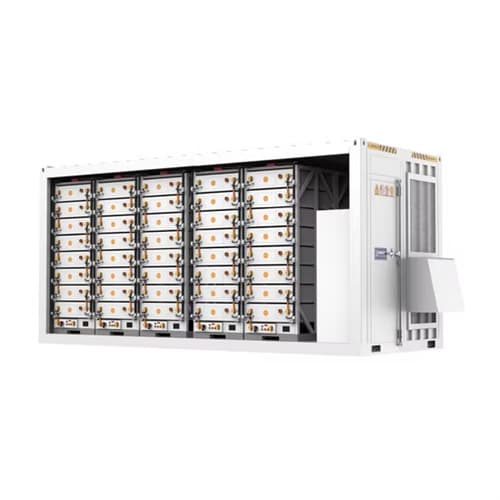
10-foot and 20-foot container,energy storage systems

1MW Photovoltaic Folding Container Project

Distributed Photovoltaic + Energy Storage Project
Your message has been received. Our team will contact you within 24 hours.
Fill out the form below to get a free quotation.
