
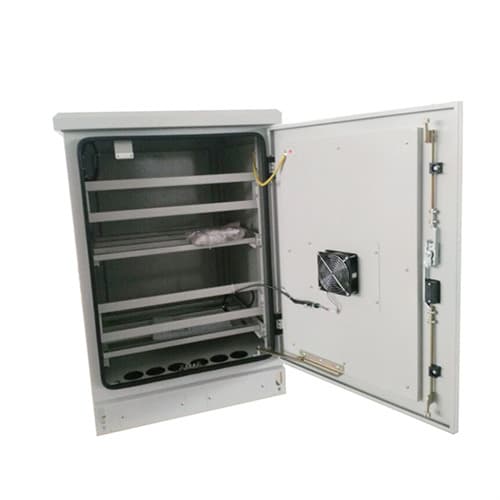
Grid energy storage, also known as large-scale energy storage, is a set of technologies connected to the electrical power grid that store energy for later use. These systems help balance supply and demand by storing excess electricity from variable renewables such as solar and inflexible sources like nuclear power, releasing it when.
Any must match electricity production to consumption, both of which vary significantly over time. Energy derived from and varies with the weather on time scales ranging from less than a second to weeks or.
Electricity can be stored directly for a short time in capacitors, somewhat longer electrochemically in , and much longer chemically (e.g. hydrogen), mechanically (e.g. pumped hydropower) or as heat. The first pumped hydroelectricity was constructed at the end.
CostsThe (LCOS) is a measure of the lifetime costs of storing electricity per
• • • (ESaaS)• •

Grid-scale battery storage in particular needs to grow significantly. In the Net Zero Scenario, installed grid-scale battery storage capacity expands 35-fold between 2022 and 2030 to nearly 970 GW. Around 170 GW of capacity is added in 2030 alone, up from 11 GW in 2022.
Technology costs for battery storage continue to drop quickly, largely owing to the rapid scale-up of battery manufacturing for electric vehicles, stimulating deployment in the.
Major markets target greater deployment of storage additions through new funding and strengthened recommendations Countries and regions making notable.
Pumped-storage hydropower is still the most widely deployed storage technology, but grid-scale batteries are catching up The total installed capacity of pumped-storage.
The rapid scaling up of energy storage systems will be critical to address the hour‐to‐hour variability of wind and solar PV electricity generation on the grid, especially as.

Total installed grid-scale battery storage capacity stood at close to 28 GW at the end of 2022, most of which was added over the course of the previous 6 years.
Technology costs for battery storage continue to drop quickly, largely owing to the rapid scale-up of battery manufacturing for electric vehicles, stimulating deployment in the.
Major markets target greater deployment of storage additions through new funding and strengthened recommendations Countries and regions making notable.
Pumped-storage hydropower is still the most widely deployed storage technology, but grid-scale batteries are catching up The total installed capacity of pumped-storage.
The rapid scaling up of energy storage systems will be critical to address the hour‐to‐hour variability of wind and solar PV electricity generation on the grid, especially as.
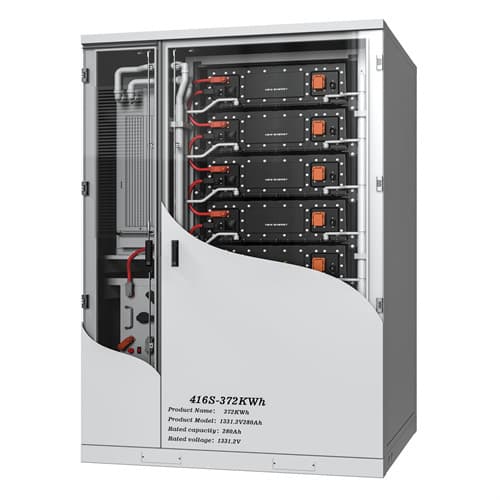
Our way of life is dependent on abundant and reliable energy supplies. Energy helps to give us warmth, mobility and food as well as satisfying our need for information and communi-cation. It has helped to drive huge advances – most recently in computing, networking and social.
The transition to distributed renewable sources, which we are currently experiencing reverses this effort. The extraction no longer requires effort, but mere capital expenditure to build the capacity, which turns natural resources into power. Once renewable assets have been financed and.
It is likely that the human population of the world will still have very similar basic energy needs in 2050 – warmth, food, mobility and connections – despite.
Historically, the greatest effort in energy generation was spent on sourcing the fuel. Early urban dwellings were limited in their size by the range from.

A battery energy storage system (BESS), battery storage power station, battery energy grid storage (BEGS) or battery grid storage is a type of technology that uses a group of in the grid to store . Battery storage is the fastest responding on , and it is used to stabilise those grids, as battery storage can transition from standby to full power in u.

Grid energy storage, also known as large-scale energy storage, is a set of technologies connected to the electrical power grid that store energy for later use. These systems help balance supply and demand by storing excess electricity from variable renewables such as solar and inflexible sources like nuclear power, releasing it.
Any must match electricity production to consumption, both of which vary significantly over time. Energy derived from and varies with the weather on time scales ranging from less than a second to weeks or.
Electricity can be stored directly for a short time in capacitors, somewhat longer electrochemically in , and much longer chemically (e.g. hydrogen), mechanically (e.g. pumped hydropower) or as heat. The first pumped hydroelectricity was constructed at the end.
CostsThe (LCOS) is a measure of the lifetime costs of storing electricity per
• • • (ESaaS)• •

A battery energy storage system (BESS), battery storage power station, battery energy grid storage (BEGS) or battery grid storage is a type of energy storage technology that uses a group of batteries in the grid to store electrical energy. Battery storage is the fastest responding dispatchable source of power.
Battery storage power plants and (UPS) are comparable in technology and function. However, battery.
Most of the BESS systems are composed of securely sealed , which are electronically monitored and replaced once their performance falls.
While the energy storage capacity of grid batteries is still small compared to the other major form of grid storage, with.
Since they do not have any mechanical parts, battery storage power plants offer extremely short control times and start times, as little as 10 ms. They can therefore help dampen the fast oscillations that.
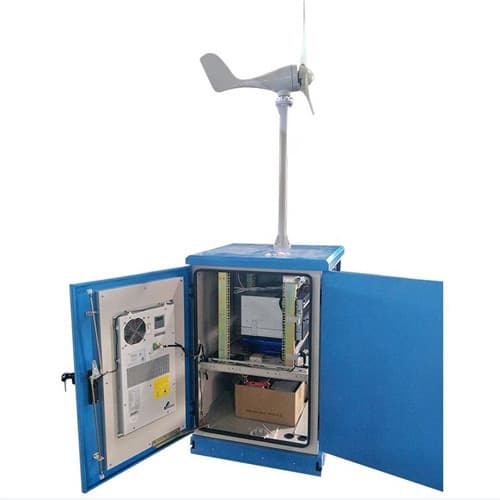
Storing energy in batteries is far from the only option. Multiple forms of storing energy exist such as flywheels, hydroelectric, and thermal energy. Using a system of for energy storage and small generators, generation may also be effective for "closed loop" home energy generation systems.

The spark associated with static electricity is caused by electrostatic discharge, or simply static discharge, as excess charge is neutralized by a flow of charges from or to the surroundings. The feeling of an electric shock is caused by the stimulation of nerves as the current flows through the human body. The energy stored as static electricity on an object v.

Grid energy storage, also known as large-scale energy storage, is a set of technologies connected to the electrical power grid that store energy for later use. These systems help balance supply and demand by storing excess electricity from variable renewables such as solar and inflexible sources like nuclear power, releasing it when.
Any must match electricity production to consumption, both of which vary significantly over time. Energy derived from and varies with the weather on time scales ranging from less than a second to weeks or.
Electricity can be stored directly for a short time in capacitors, somewhat longer electrochemically in , and much longer chemically (e.g. hydrogen), mechanically (e.g. pumped hydropower) or as heat. The first pumped hydroelectricity was constructed at the end.
CostsThe (LCOS) is a measure of the lifetime costs of storing electricity per
• • • (ESaaS)• •
Our Projects in the wowld

Integrated Photovoltaic-Storage Project

Domestic Energy Storage Project

Energy Storage System,Control System,Electrical Protection

10-foot and 20-foot container,energy storage systems

1MW Photovoltaic Folding Container Project

Distributed Photovoltaic + Energy Storage Project
Your message has been received. Our team will contact you within 24 hours.
Fill out the form below to get a free quotation.
